A die casting machine is an industrial manufacturing system used to produce metal components by forcing molten metal into a mold cavity under high pressure. This process is known as high pressure die casting and is widely used for producing precise, complex shapes with smooth surfaces.
Die casting is a manufacturing process that originated in the 19th century and has evolved into a key method for producing metal components in industries such as automotive, aerospace, electronics, and consumer goods. Die casting machines enable mass production with consistent dimensions and minimal finishing requirements.
The process involves injecting molten metal into a mold cavity under high pressure. Modern systems use automated controls and advanced engineering to improve efficiency and reduce material waste.
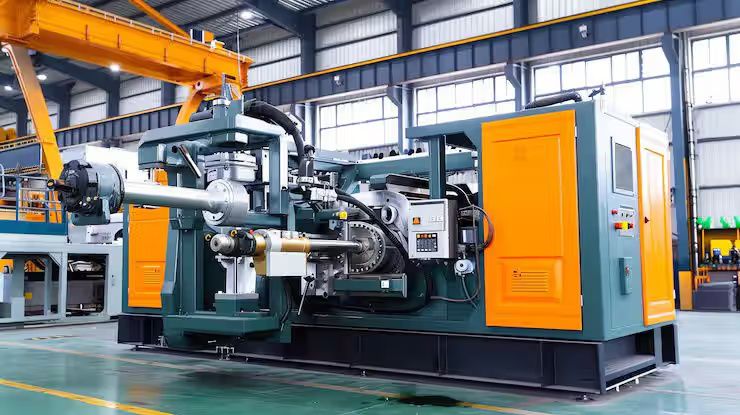
Main Types of Die Casting Machines
- Hot chamber die casting machines
- Cold chamber die casting machines
Hot chamber machines are used for low melting point metals like zinc and magnesium, while cold chamber machines are used for higher melting point metals such as aluminum.
Key Components
- Injection system
- Die (mold) cavity
- Clamping unit
- Cooling system
These components work together to ensure accurate and efficient casting operations.
Importance of Die Casting Machines
Die casting plays a vital role in industrial manufacturing and supply chains.
Precision Manufacturing
High-pressure die casting produces components with tight tolerances and complex shapes, essential for industries like automotive and electronics.
Material Efficiency
Reusable molds and controlled processes minimize waste, supporting efficient use of materials such as aluminum and zinc.
High Production Output
Automated systems enable continuous production, making die casting suitable for large-scale manufacturing.
Surface Quality
Finished components often require minimal machining due to smooth surfaces and consistent shapes.
Industry Applications
Die casting is widely used in:
- Automotive components (engine parts, transmissions)
- Electronics (casings, connectors)
- Aerospace systems
- Industrial machinery
Types of Die Casting Processes
Hot Chamber Die Casting
- Suitable for zinc, magnesium, and lead alloys
- Faster cycle times
- Injection system immersed in molten metal
Cold Chamber Die Casting
- Used for aluminum and high-temperature metals
- Metal is poured into the chamber before injection
- Handles higher temperatures
Vacuum Die Casting
- Reduces air entrapment
- Improves structural integrity
Semi-Solid Die Casting
- Uses partially solidified metal
- Enhances mechanical properties
Materials Used in Die Casting
Material selection affects strength, weight, and durability.
Common Materials
- Aluminum alloys
- Zinc alloys
- Magnesium alloys
- Copper-based alloys
Material Properties Comparison
| Material Type | Strength | Weight | Corrosion Resistance | Common Use |
|---|---|---|---|---|
| Aluminum | High | Light | Good | Automotive parts |
| Zinc | Moderate | Medium | Excellent | Small components |
| Magnesium | Moderate | Very Light | Moderate | Aerospace parts |
| Copper Alloys | High | Heavy | Good | Electrical components |
This table highlights how material choice influences application and performance.
Importance of Mold Design
Mold design is critical for achieving quality and efficiency in die casting.
Key Design Elements
- Gate and runner systems for metal flow
- Cooling channels for temperature control
- Venting systems to release air
- Ejector pins for part removal
Proper design helps reduce defects, improve accuracy, and increase production speed.
Recent Updates and Trends (2025–2026)
Die casting technology continues to evolve with new innovations.
Key Developments
- Automation expansion: Increased use of robotic systems
- Digital monitoring: IoT-based tracking of temperature and pressure
- Sustainability focus: Energy-efficient furnaces and recyclable materials
- Lightweight materials: Increased use of aluminum in automotive manufacturing
These trends reflect advancements in efficiency and sustainability.
Laws and Policies
Die casting operations are regulated by safety and environmental standards.
Key Regulatory Areas
- Workplace safety standards for machinery operation
- Environmental regulations for emissions and waste
- ISO quality standards for manufacturing processes
These regulations ensure safe, reliable, and environmentally responsible production.
Tools and Resources
Design and Engineering Tools
- CAD software for mold design
- CAM systems for manufacturing
Simulation Tools
- Casting simulation software
- Thermal analysis tools
Monitoring Systems
- IoT-based machine monitoring
- Real-time production dashboards
Industry Standards
- ISO manufacturing guidelines
- Engineering reference materials
These tools support efficient production and quality control.
Process Flow Overview
| Step | Description |
|---|---|
| Mold Preparation | Cleaning and lubrication |
| Metal Melting | Heating metal to required temperature |
| Injection | Forcing molten metal into mold |
| Cooling | Solidification of metal |
| Ejection | Removal of finished component |
This process ensures consistent and reliable component production.
Frequently Asked Questions
What is a die casting machine used for?
It produces metal components by injecting molten metal into molds under high pressure.
What is the difference between hot and cold chamber casting?
Hot chamber is used for low melting metals, while cold chamber is used for high-temperature metals like aluminum.
Why is aluminum commonly used?
It is lightweight, strong, and corrosion-resistant, making it ideal for many applications.
What are common defects?
Defects include porosity, surface issues, and incomplete filling, often related to mold design.
How does automation improve the process?
Automation increases consistency, reduces errors, and improves efficiency.
Conclusion
Die casting machines are essential for producing precise and durable metal components in modern manufacturing. They support large-scale production across industries such as automotive, electronics, and aerospace.
Recent advancements in automation, digital monitoring, and sustainable practices highlight the ongoing evolution of die casting technology. Understanding machine types, materials, and processes provides valuable insight into how this method supports efficient and scalable industrial production.