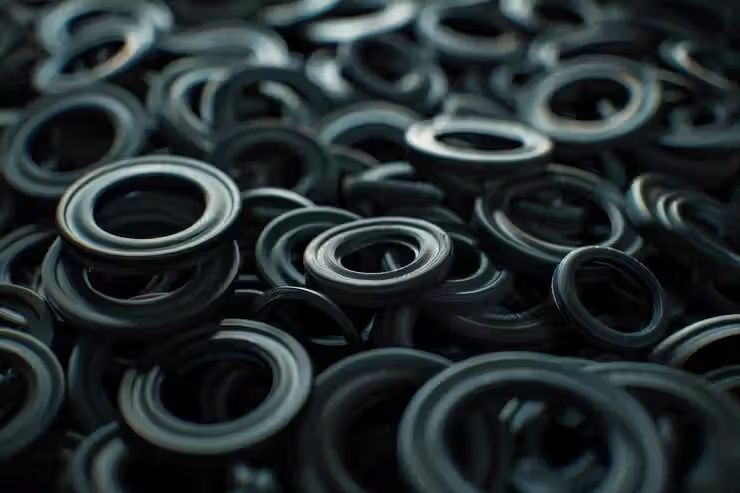
O-rings are circular sealing components with a round cross-section, designed to fit into grooves and create a seal between two or more mechanical parts. They exist to prevent the leakage of fluids or gases and to block the entry of contaminants such as dust or moisture. Their simple shape makes them one of the most widely used sealing elements in mechanical systems.
The concept of the O-ring developed as machinery became more complex and required reliable sealing solutions. Earlier methods such as flat gaskets were often bulky and inconsistent, while O-rings provided a compact and efficient alternative.
Today, O-rings are widely used in hydraulic systems, pneumatic equipment, automotive components, aerospace assemblies, and industrial machinery. Their versatility and reliability make them essential in modern engineering applications.
Why O-Rings Matter Today
O-rings play a crucial role in maintaining the integrity of mechanical systems. Even minor leaks can lead to performance issues, safety risks, or equipment damage.
Key Reasons This Topic Matters
- Leak prevention: Stops fluid and gas escape
- Contamination protection: Shields components from external particles
- Pressure control: Maintains system stability
- Efficient design: Supports compact mechanical systems
O-rings are important for engineers, maintenance teams, and manufacturers working with pressure-based systems.
Recent Developments in O-Ring Technology (2024–2025)
Recent advancements in O-ring technology focus on improving material performance, sustainability, and design precision.
Key Trends Overview
| Trend | Description | Impact |
|---|---|---|
| Advanced materials | Improved elastomers for high temperature and chemical resistance | Enhances durability and performance |
| Sustainability focus | Longer-lasting materials reducing replacement frequency | Reduces material waste |
| Digital simulation tools | Analysis of compression and wear before production | Improves design accuracy |
| Standardization improvements | Consistent sizing and tolerance control | Supports global compatibility |
These trends highlight the growing importance of precision and efficiency in sealing technologies.
Laws and Policies Affecting O-Rings
O-rings are governed mainly by technical and industrial standards rather than direct consumer regulations. These standards ensure reliability and compatibility across systems.
Key Regulatory Areas
- ISO standards: Define dimensions, materials, and testing methods
- Safety regulations: Ensure reliability in pressure systems
- Environmental policies: Influence material selection and durability
- Industry guidelines: Maintain consistency across applications
These frameworks support safe and efficient use of O-rings in various industries.
Tools and Resources for Understanding O-Rings
Various technical tools and references help engineers and learners understand O-ring selection and application.
Useful Tools and References
- Size and groove charts: Guide proper installation
- Material compatibility tables: Match materials with applications
- Performance guides: Define pressure and temperature limits
- Engineering handbooks: Explain sealing principles
- Simulation tools: Analyze compression and wear
Common O-Ring Materials
| Material Type | General Properties | Typical Use Environment |
|---|---|---|
| Nitrile rubber | Oil-resistant and flexible | Hydraulic systems |
| Fluorocarbon | High temperature resistance | Chemical processing |
| Silicone | Wide temperature range | Static sealing |
| EPDM | Weather and water resistance | Outdoor equipment |
| PTFE blends | Low friction and chemical stability | Specialized applications |
Typical O-Ring Applications
| Application Area | Role of O-Ring |
|---|---|
| Hydraulic cylinders | Maintain pressure seal |
| Pneumatic valves | Control air leakage |
| Automotive engines | Seal fluids and gases |
| Industrial pumps | Prevent fluid loss |
| Aerospace systems | Ensure reliability |
These resources help explain how O-rings function across different systems.
Frequently Asked Questions
What Is the Main Function of an O-Ring?
An O-ring creates a seal that prevents leakage of fluids or gases between mechanical parts.
Why Are O-Rings Circular?
Their shape allows even compression and consistent sealing within a groove.
Can O-Rings Be Used in Moving Systems?
Yes, they are suitable for both static and dynamic applications when properly designed.
What Affects O-Ring Performance?
Factors include material type, pressure, temperature, groove design, and lubrication.
Are O-Rings Standardized?
Yes, many O-ring dimensions and materials follow international standards for compatibility.
Conclusion
O-rings are small but essential components in mechanical systems, providing reliable sealing across a wide range of applications. Their simple design enables effective performance under varying pressures and conditions.
Understanding their materials, applications, and design considerations helps highlight their importance in modern engineering. O-rings continue to play a vital role in ensuring efficiency, safety, and durability in industrial and mechanical systems.