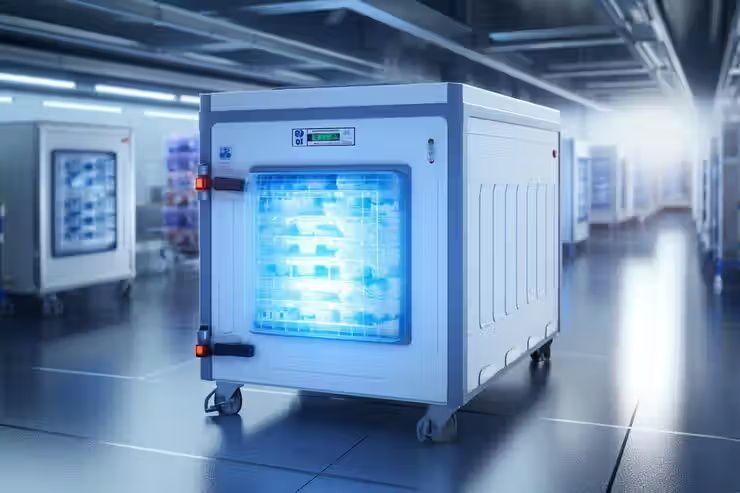
A humidity chamber, also known as an environmental test chamber or climate test chamber, is a controlled enclosure used to simulate specific temperature and humidity conditions. These chambers are widely used in laboratories, manufacturing facilities, and research environments to test how materials, products, and components respond to environmental stress.
Humidity chambers are specialized environmental testing systems used to simulate controlled temperature and moisture conditions. They are widely used in industries such as pharmaceuticals, electronics, automotive, and food processing to evaluate product durability and performance.
These chambers regulate two primary variables:
- Temperature (°C or °F)
- Relative humidity (%)
Modern systems include digital controls, sensors, and programmable settings to replicate extreme and cyclic environmental conditions.
Types of Humidity Chambers
Temperature Humidity Chambers
Designed to test combined effects of temperature and humidity on materials and products.
Stability Chambers
Used primarily in pharmaceutical testing to evaluate product shelf life under controlled conditions.
Walk-In Chambers
Large-scale chambers suitable for testing bulk materials or large equipment.
Benchtop Chambers
Compact units designed for laboratory experiments and smaller samples.
Thermal Cycling Chambers
Simulate repeated temperature changes along with humidity variations.
Importance of Humidity Chambers
Humidity chambers are essential for ensuring product quality, safety, and compliance.
Product Quality Assurance
Manufacturers use these chambers to test how products respond to environmental conditions:
- Electronics for moisture resistance
- Pharmaceuticals for stability
- Automotive components for durability
Regulatory Compliance
Humidity chambers help meet requirements for:
- Stability testing validation
- Calibration standards
- Product certification processes
Risk Reduction
Testing under controlled conditions helps identify risks such as:
- Product failure
- Material degradation
- Packaging damage
Research and Development
They enable researchers to simulate real-world environments, supporting innovation and product improvement.
Key Components and Design Features
Control System
Digital controllers regulate temperature and humidity with programmable cycles.
Sensors
- Temperature sensors monitor heat levels
- Humidity sensors track moisture levels
Air Circulation System
Fans ensure uniform distribution of temperature and humidity inside the chamber.
Humidification System
Water reservoirs generate controlled moisture levels.
Insulated Walls
Maintain stable internal conditions and improve energy efficiency.
Design Feature Overview
| Component | Function |
|---|---|
| Digital Controller | Regulates environmental conditions |
| Humidity Generator | Produces controlled moisture |
| Temperature Sensor | Measures heat levels |
| Air Circulation Fan | Ensures uniform airflow |
| Insulated Panels | Maintains internal stability |
This table summarizes the key design elements of humidity chambers.
Recent Updates and Trends (2025–2026)
Humidity chamber technology has advanced with new innovations.
Key Developments
- Smart monitoring systems: IoT-enabled remote tracking of test conditions
- Energy efficiency improvements: Better insulation and optimized cooling systems
- Data logging and automation: Enhanced recording and analysis of test data
- Sustainability focus: Adoption of eco-friendly refrigerants and materials
These trends highlight increased automation and environmental awareness in testing systems.
Laws and Policies
Humidity chambers must comply with industry-specific regulations and standards.
Pharmaceutical Industry
- WHO guidelines for stability testing
- ICH standards for environmental conditions
Electronics and Industrial Testing
- ISO standards for environmental testing and calibration
India Regulations
- NABL guidelines for laboratory accreditation and testing accuracy
Compliance ensures reliable and reproducible testing results.
Tools and Resources
Monitoring and Control Software
- Digital dashboards for real-time tracking
- Automated alerts for condition changes
Calibration Tools
- Hygrometers for humidity measurement
- Thermometers for temperature verification
Data Logging Systems
- Software for recording environmental data
- Cloud storage for long-term tracking
Standards and Guidelines
- ISO publications
- WHO stability testing documentation
Maintenance Tools
- Inspection checklists
- Preventive maintenance schedules
These resources support accuracy, compliance, and operational efficiency.
Applications Overview
Pharmaceutical Testing
Evaluates drug stability under controlled conditions.
Electronics Testing
Assesses resistance to moisture and corrosion.
Automotive Industry
Tests durability under varying environmental conditions.
Food and Packaging
Analyzes shelf life and packaging performance.
Maintenance and Operational Practices
| Practice | Purpose |
|---|---|
| Regular Calibration | Ensures measurement accuracy |
| Cleaning Surfaces | Prevents contamination |
| Sensor Verification | Maintains reliability |
| Software Updates | Improves system performance |
| Seal Inspection | Prevents environmental leakage |
Proper maintenance ensures long-term performance and reliability.
Frequently Asked Questions
What is a humidity chamber used for?
It is used to simulate controlled environmental conditions for testing materials and products.
Why is stability testing important?
It helps determine how products perform over time under environmental stress.
How accurate are humidity chambers?
Accuracy depends on calibration and sensor quality, with regular maintenance improving performance.
Can humidity chambers simulate extreme conditions?
Yes, they can replicate high humidity, low humidity, and temperature variations.
What industries use humidity chambers?
They are widely used in pharmaceuticals, electronics, automotive, food processing, and research laboratories.
Conclusion
Humidity chambers are essential tools for environmental testing across multiple industries. They enable controlled simulation of temperature and humidity conditions, supporting product quality, compliance, and research.
Recent advancements in automation, energy efficiency, and digital monitoring have improved their functionality and reliability. Understanding their design, applications, and regulatory requirements helps ensure effective use in modern industrial and scientific environments.