Industrial robots are programmable machines designed to perform physical tasks such as assembly, welding, packaging, inspection, and material handling. They emerged to address the need for precision, repeatability, and efficiency in manufacturing environments where manual processes were slow, inconsistent, or hazardous.
Industrial robots work alongside automation and machine control systems to coordinate movement, timing, and decision-making. These systems use sensors, controllers, and software to ensure accurate operation in complex environments. Over time, industrial robotics has expanded beyond traditional manufacturing into logistics, electronics, and food processing.
Common concepts in this field include robotic arms, programmable controllers, and smart manufacturing systems. Together, these elements form the foundation of modern automated production.
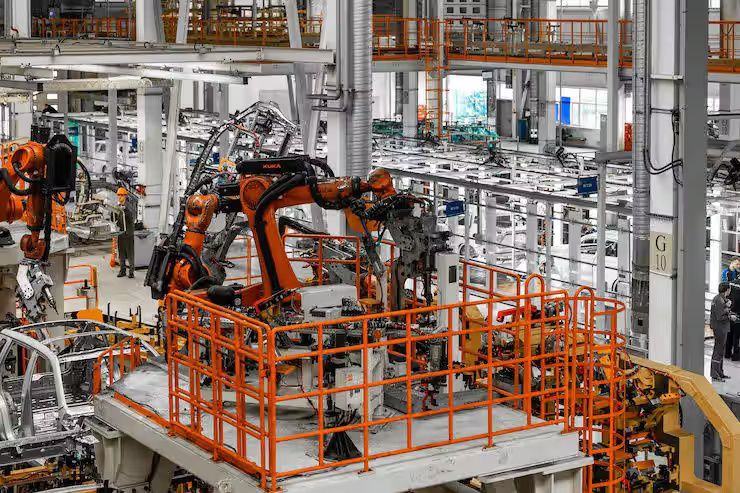
Importance of Industrial Robots in Modern Industry
Industrial robots play a key role in solving modern manufacturing challenges. They help industries maintain quality while increasing production efficiency.
Key Reasons Industrial Robotics Matters
- Improves accuracy and repeatability
- Reduces exposure to hazardous tasks
- Supports continuous production cycles
- Enables data-driven decision-making
Industries Affected by Industrial Robotics
- Automotive manufacturing
- Electronics assembly
- Metal fabrication
- Logistics and warehousing
Industrial robots help address issues such as human error, inconsistent production, and inefficient resource use. This makes them central to industrial modernization.
Recent Updates and Industry Trends
Recent developments in 2025 show rapid advancements in industrial robotics. These trends reflect improvements in intelligence, connectivity, and efficiency.
Notable Trends
- AI-enabled robot controllers for adaptive motion
- Increased use of collaborative robots
- Expansion of digital twin technology
- Focus on energy-efficient automation systems
Smart factory adoption has also increased, integrating robotics with industrial IoT platforms. Predictive maintenance tools now help identify issues before failures occur.
Laws, Policies, and Regulatory Environment
Industrial robots are governed by safety and compliance regulations. These rules ensure safe operation and protect workers in automated environments.
Key Regulatory Considerations
- Machine safety standards
- Electrical and mechanical compliance
- Risk assessment procedures
- Workplace safety guidelines
Governments also promote automation through modernization programs. These initiatives encourage safe and efficient use of robotic systems.
Tools and Resources for Industrial Robotics
Various tools support the design, monitoring, and optimization of automation systems. These resources help users understand and manage industrial robotics effectively.
Common Tools and Resources
- Robot simulation software
- Automation calculators for cycle time
- Machine control documentation libraries
- Industrial communication frameworks
- Monitoring dashboards
Tool Categories Table
| Tool Category | Primary Function | Typical Use Case |
|---|---|---|
| Simulation Platforms | Virtual testing of robot motion | Layout planning |
| Machine Control Software | Coordinate sensors and actuators | Process control |
| Monitoring Dashboards | Real-time performance tracking | Fault detection |
| Data Analytics Tools | Analyze production metrics | Efficiency insights |
These tools support planning, testing, and performance improvement in automation systems.
Industrial Robot Types and Applications
Industrial robots are categorized based on their structure and movement capabilities. Each type is suited to specific tasks and industries.
Common Robot Types
- Articulated robots for complex multi-axis movement
- SCARA robots for high-speed assembly tasks
- Cartesian robots for linear positioning
- Delta robots for lightweight and fast operations
Robot Types Table
| Robot Type | Motion Characteristics | Common Applications |
|---|---|---|
| Articulated | Multi-axis rotational movement | Welding, painting |
| SCARA | Horizontal compliance | Electronics assembly |
| Cartesian | Linear axis motion | Pick-and-place operations |
| Delta | Parallel arm structure | Packaging, sorting |
Understanding these categories helps in selecting the right robot for specific tasks.
FAQs: Common Questions About Industrial Robots
What is the difference between industrial robots and automation systems?
Industrial robots are physical machines, while automation systems include the software and controls that manage their operation.
How do machine control systems improve accuracy?
They process sensor data in real time to adjust movement and maintain precision during operations.
Are industrial robots only used in manufacturing?
No, they are also used in logistics, electronics, healthcare-related production, and food processing.
What skills are needed to understand industrial robotics?
Basic knowledge of mechanics, control systems, and industrial software is helpful.
How is data used in robotic automation?
Data supports monitoring, diagnostics, and optimization of production processes.
Conclusion
Industrial robots and automation systems are essential for modern production environments. They improve efficiency, accuracy, and safety across various industries.
With ongoing advancements in AI, connectivity, and system integration, their role continues to grow. Understanding these systems helps individuals and organizations adapt to evolving industrial technologies and improve operational performance.