Explore the World of Modern CNC Machining Services
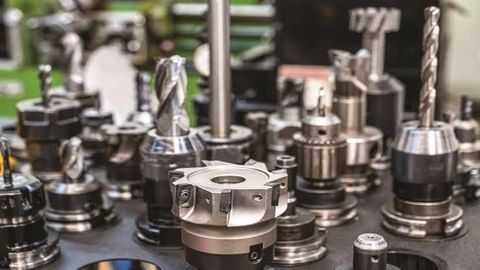
Modern CNC machining services transform digital blueprints into physical components with microscopic precision. By relying on computer-controlled cutting tools, contemporary workshops remove material from solid blocks of metal, plastic, or composite to create intricate parts.
Understanding how modern CNC machining services operate provides insight into the backbone of contemporary industrial production and engineering.
Context
Computer Numerical Control (CNC) machining is a subtractive manufacturing method. Unlike additive processes that build objects layer by layer, CNC equipment starts with a solid block of raw material, known as a workpiece, and trims away excess matter until the final shape remains.
Historical Background
The technology originated in the late 1940s and 1950s through early numerical control machines that used punched paper tape to direct tool movements. Over subsequent decades, analog tape gave way to digital microprocessors, Computer-Aided Design (CAD), and Computer-Aided Manufacturing (CAM) software. Today, operators upload three-dimensional digital models directly into machine controllers, which translate geometric coordinates into exact physical toolpaths.
Primary Purpose
The central goal of CNC machining is to produce identical, high-tolerance components repeatedly and efficiently. Whether fabricating a single prototype or thousands of standardized pieces, automated machines eliminate human fatigue and manual positioning errors.
Importance
Precision manufacturing underpins almost every physical product in modern society. Without reliable CNC capabilities, industries would struggle to maintain safety standards, interchangeability, and structural reliability across global supply chains.
Key Beneficiaries and Affected Sectors
Aerospace and Defense: Turbine blades, structural airframe brackets, and satellite housings demand extreme dimensional accuracy and specialized alloy handling.
Medical Technology: Surgical instruments, orthopedic implants, and diagnostic device enclosures rely on biocompatible metals machined to smooth, sterile finishes.
Automotive and Mobility: Engine blocks, transmission gears, and electric vehicle battery housings require consistent repeatability across massive production runs.
Consumer Electronics: Precision aluminum chassis, heat sinks, and internal connectors depend on rapid, miniature milling operations.
| Machine Type | Primary Motion | Typical Applications |
| 3-Axis Mill | Linear movement along X, Y, and Z axes | Flat surfaces, pockets, and basic prismatic parts |
| 5-Axis Mill | Linear X, Y, Z plus two rotational axes | Complex aerospace impellers and contoured molds |
| CNC Lathe | Workpiece rotates against a stationary cutter | Cylindrical shafts, threaded fasteners, and bushings |
| Swiss-Type Lathe | Sliding headstock feeds bar stock through a guide bushing | Miniature, ultra-precise medical pins and watch components |
Recent Updates
Technological integration has accelerated rapidly across contemporary machine shops. Modern facilities no longer operate standalone cutting equipment; instead, they rely on interconnected digital ecosystems.
Artificial Intelligence and Digital Twins
Modern CNC controllers increasingly utilize artificial intelligence to monitor spindle load, vibration, and temperature in real time.
Automation and Multi-Axis Adoption
Facilities are expanding the use of robotic arms and automated pallet changers to load raw stock and unload finished components.
Sustainable Machining Practices
Environmental efficiency has become a measurable benchmark in precision engineering. Many workshops now implement Minimum Quantity Lubrication (MQL) systems, which replace traditional flood coolants with fine micro-mists to reduce chemical waste. Regenerative spindle drives also capture braking energy and return electricity to the facility grid.
Laws or Policies
Because machined parts frequently perform critical functions in transportation, healthcare, and defense, strict regulatory frameworks govern workshop operations. Compliance ensures both worker safety and end-product reliability.
Quality Management Standards
ISO 9001: This international standard establishes baseline requirements for consistent quality management systems, documentation, and continuous process improvement.
AS9100: Built upon ISO 9001, this standard adds strict traceability, risk management, and counterfeit-part prevention rules mandatory for aerospace and space applications.
ISO 13485: Medical component manufacturers must adhere to this framework, which governs hygiene, validation, and risk controls for medical devices.
Export Controls and Workplace Safety
Facilities handling defense-related blueprints in the United States must comply with International Traffic in Arms Regulations (ITAR). ITAR restricts access to technical data and physical hardware exclusively to authorized personnel to protect national security. Meanwhile, workplace safety agencies such as OSHA enforce strict machine guarding, lockout-tagout procedures, and airborne mist filtration standards to protect machinists from mechanical hazards and metal dust.
Tools and Resources
Engineers, students, and designers rely on a variety of digital platforms and reference utilities to prepare files and calculate machining parameters.
CAD and CAM Software Platforms
Autodesk Fusion: A cloud-based platform combining parametric 3D modeling with integrated toolpath generation and simulation.
Mastercam: An industry-standard CAM suite used extensively for complex multi-axis milling and turning operations.
SolidWorks: Widely utilized mechanical engineering software for creating detailed assembly drawings and tolerance specifications.
Reference Calculators and Guides
FSWizard: A web and mobile speeds-and-feeds calculator that helps programmers determine optimal spindle RPM and cutting speeds based on tool diameter and material hardness.
Machinist's Handbook: A comprehensive technical reference manual detailing thread dimensions, geometric dimensioning and tolerancing (GD&T), and metallurgy charts.
NIST Engineering Statistics Handbook: A public resource provided by the National Institute of Standards and Technology covering quality control, measurement uncertainty, and process capability analysis.
FAQs
What materials work best with modern CNC machining services?
Metals such as aluminum, stainless steel, brass, and titanium are the most common choices due to their structural strength and predictable cutting behavior. Engineering plastics like ABS, polycarbonate, PEEK, and nylon are also widely machined for lightweight or electrically insulating applications.
How accurate are modern CNC machining services?
Standard CNC operations routinely achieve dimensional tolerances within plus or minus 0.005 inches (0.127 millimeters). High-precision equipment operating in temperature-controlled environments can hold tolerances as tight as plus or minus 0.0005 inches (0.0127 millimeters) or finer.
What file formats are required to program a CNC machine?
Engineers typically provide neutral 3D CAD file formats such as STEP (.stp) or IGES (.igs), which preserve exact surface geometry across different software platforms. Two-dimensional PDF drawings are usually included alongside 3D models to specify critical tolerances, thread callouts, and surface finish requirements.
How does 3-axis machining differ from 5-axis machining?
A 3-axis machine moves the cutting tool along three linear directions: left-to-right, front-to-back, and up-and-down. A 5-axis machine adds two rotational axes, allowing the cutting tool to approach the workpiece from virtually any angle without manually repositioning the part.
Conclusion
Modern CNC machining services bridge the gap between digital engineering and physical reality through automated, high-precision material removal. Driven by advancements in artificial intelligence, digital twins, and multi-axis hardware, these processes deliver consistent components across aerospace, medical, and industrial sectors.