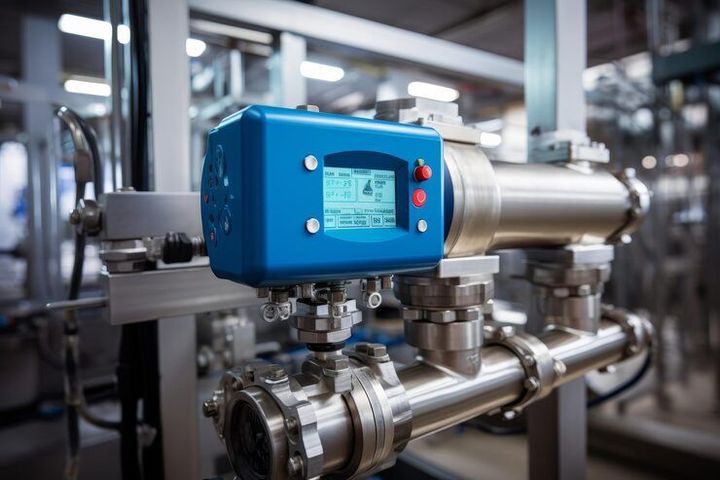
Industrial Sensors Resources: Helpful Information About Modern Sensor Technology
Industrial sensors are devices that detect physical or chemical conditions and convert them into signals that machines, controllers, or monitoring systems can interpret.
Common measurements include temperature, pressure, flow, level, position, vibration, humidity, and proximity. Understanding industrial sensors resources can help readers learn how modern sensor technology supports industrial processes.
Modern factories increasingly connect sensors with programmable logic controllers, industrial networks, data platforms, and automation systems. These connections allow organizations to monitor equipment and processes more consistently while generating useful operational information. The following guide explains the context, importance, recent developments, regulations, and practical resources related to industrial sensor technology.
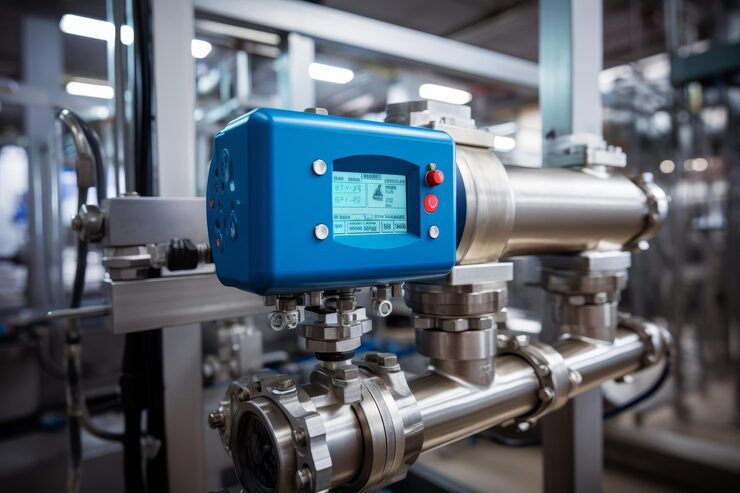
Context
Industrial sensors have been used for decades in manufacturing, energy, transportation, chemical processing, food production, water treatment, and other industrial environments. Their main purpose is to detect changes in operating conditions and communicate measurements to another system.
A basic industrial sensing arrangement normally includes a sensing element, signal-conditioning electronics, a communication interface, and a receiving device. Depending on the application, the output may be an analog signal, digital signal, network message, or wireless transmission.
Examples of widely used industrial sensors include:
| Sensor Type | Typical Measurement | Common Application |
|---|---|---|
| Temperature sensor | Temperature | Process monitoring |
| Pressure sensor | Pressure | Pumps and process lines |
| Flow sensor | Fluid or gas flow | Pipelines and processing |
| Level sensor | Material level | Tanks and containers |
| Proximity sensor | Object presence | Machine automation |
| Vibration sensor | Mechanical vibration | Equipment monitoring |
| Humidity sensor | Moisture in air | Environmental control |
| Position sensor | Movement or position | Robotics and machinery |
Sensor selection depends on measurement range, accuracy, response time, environmental conditions, installation method, communication protocol, and compatibility with control equipment.
Modern industrial sensors can also communicate through technologies such as IO-Link, Modbus, HART, Ethernet-based industrial networks, and wireless protocols. These capabilities allow measurement data to move beyond individual machines and into broader monitoring systems.
Importance
Industrial sensors matter because automated equipment needs accurate information about physical conditions. A controller cannot regulate temperature, pressure, speed, or position effectively without appropriate measurement data.
Sensors can support several important industrial activities:
- Process monitoring and control
- Equipment condition monitoring
- Quality management
- Energy monitoring
- Safety-related detection
- Production data collection
- Predictive maintenance analysis
For engineers and technicians, sensor information can help identify abnormal operating conditions. For operators, clear measurements can make industrial processes easier to observe. For system designers, sensor specifications are important when developing automation and control architectures.
Sensor accuracy also affects downstream decisions. A poorly selected or incorrectly installed sensor can produce unreliable measurements. Factors such as electrical interference, vibration, temperature changes, contamination, mechanical stress, and incorrect calibration can influence sensor performance.
Industrial sensors are therefore relevant to manufacturers, automation engineers, maintenance teams, system integrators, researchers, educators, and organizations responsible for industrial equipment.
Recent Updates
Modern sensor technology is increasingly connected to industrial digitalization. Instead of functioning only as isolated measurement devices, sensors can now participate in connected automation systems and provide data for analysis.
One important development is the growth of smart sensors. These devices may include onboard diagnostics, digital communication, configuration features, and additional processing capabilities. This can provide more information than a simple analog measurement.
Another development is the increased use of industrial Internet of Things architectures. Sensors can transmit operational information to local gateways, edge-computing systems, or broader data platforms.
Edge computing is particularly useful where rapid analysis is important. Data can be processed closer to the equipment rather than sending every measurement to a remote system.
Artificial intelligence and machine-learning techniques are also being applied to sensor data. For example, vibration and temperature measurements can be analyzed to identify patterns associated with changing equipment conditions. Such systems still depend on appropriate sensor placement, data quality, and sound engineering practices.
Current developments include:
- Wireless industrial sensing
- Smart sensor diagnostics
- Edge-based data processing
- Digital sensor communication
- Condition monitoring
- Multi-sensor data analysis
- Greater cybersecurity integration
Interoperability is another important area. Standards such as OPC UA and IO-Link help equipment from different manufacturers communicate through structured interfaces, although actual compatibility depends on the specific implementation.
Laws or Policies
Industrial sensor applications can be affected by several categories of regulations and technical standards. The exact requirements depend on the country, industry, equipment, workplace, and intended application.
Electrical and electronic equipment may need to comply with applicable national or regional safety and electromagnetic-compatibility requirements. In hazardous environments, additional requirements can apply to equipment designed for locations where explosive gases, vapors, or dust may be present.
Organizations may also need to consider functional-safety standards when sensors form part of a safety-related control system. Standards in the IEC 61508 family provide a framework for functional safety of electrical, electronic, and programmable electronic safety-related systems.
Industrial cybersecurity has also become increasingly important. Connected sensors can become part of larger operational technology networks, making network security, access control, software maintenance, and data protection relevant considerations.
Examples of standards and regulatory areas include:
- IEC functional-safety standards
- ISO industrial and quality standards
- Electromagnetic compatibility requirements
- Hazardous-location equipment requirements
- Machinery safety requirements
- Industrial cybersecurity frameworks
Requirements differ substantially between applications. Organizations should consult the applicable national authority, industry regulator, standards body, and equipment documentation rather than assuming that one standard applies universally.
Tools and Resources
Reliable technical resources can make it easier to understand sensor specifications and applications. Manufacturer documentation can provide datasheets, wiring information, measurement ranges, environmental ratings, and communication details.
Standards organizations are also useful for understanding technical requirements. The International Electrotechnical Commission and International Organization for Standardization publish standards covering many aspects of industrial technology.
Useful resources include:
- IEC publications for electrical and electronic standards
- ISO publications for international standards
- NIST resources for measurement and cybersecurity topics
- Manufacturer datasheets and technical manuals
- Industrial automation documentation
- Engineering unit-conversion calculators
- Sensor-selection guides
- Calibration references
- Industrial communication documentation
When comparing sensor specifications, readers should pay attention to measurement range, accuracy, repeatability, resolution, response time, operating temperature, ingress protection, connection type, and output format.
A technical datasheet is usually more useful than relying only on a general product description because it provides the detailed specifications needed for engineering evaluation.
FAQs
What are industrial sensors?
Industrial sensors are devices that detect physical or chemical conditions and convert those conditions into usable signals. They can measure temperature, pressure, flow, level, position, vibration, and other variables.
Why are industrial sensors important?
They provide measurement information needed for monitoring, automation, process control, equipment analysis, and safety-related functions. Reliable measurements help control systems respond to changing operating conditions.
What types of industrial sensors are commonly used?
Common types include temperature, pressure, flow, level, proximity, position, vibration, humidity, and photoelectric sensors. The appropriate type depends on the variable being measured and the operating environment.
What is a smart industrial sensor?
A smart sensor generally combines sensing with electronic processing or digital communication. Some smart sensors can provide diagnostics, configuration information, and additional measurement data through digital interfaces.
How should an industrial sensor be selected?
Selection should consider the measurement range, required accuracy, environmental conditions, response time, installation requirements, output signal, communication protocol, calibration needs, and applicable safety requirements.
Conclusion
Industrial sensors form an important measurement layer within modern automation and manufacturing systems. From basic temperature measurement to connected condition monitoring, sensor technology provides information that helps machines and people understand industrial processes.
Modern industrial sensors are becoming more connected, intelligent, and capable of providing diagnostic information. Understanding their measurement principles, specifications, communication methods, standards, and application requirements is important for making informed technical decisions.
Reliable industrial sensors resources include standards organizations, technical manuals, datasheets, engineering references, calibration information, and industrial automation documentation. Using authoritative technical information can help readers understand sensor technology without relying on promotional claims.
As industrial environments become increasingly connected, sensor knowledge is also becoming relevant to areas such as edge computing, industrial networking, cybersecurity, and data analytics. These developments are expanding the role of sensors from simple measurement devices to important components of digital industrial systems.