App Promotion Basics: An Introduction to Modern Growth Strategies
Mobile applications have become an important part of everyday digital activity, covering areas such as communication, entertainment, education, finance, health, shopping, and productivity.
App promotion refers to the methods used to increase awareness, attract relevant users, encourage installations, and support continued engagement with an application.
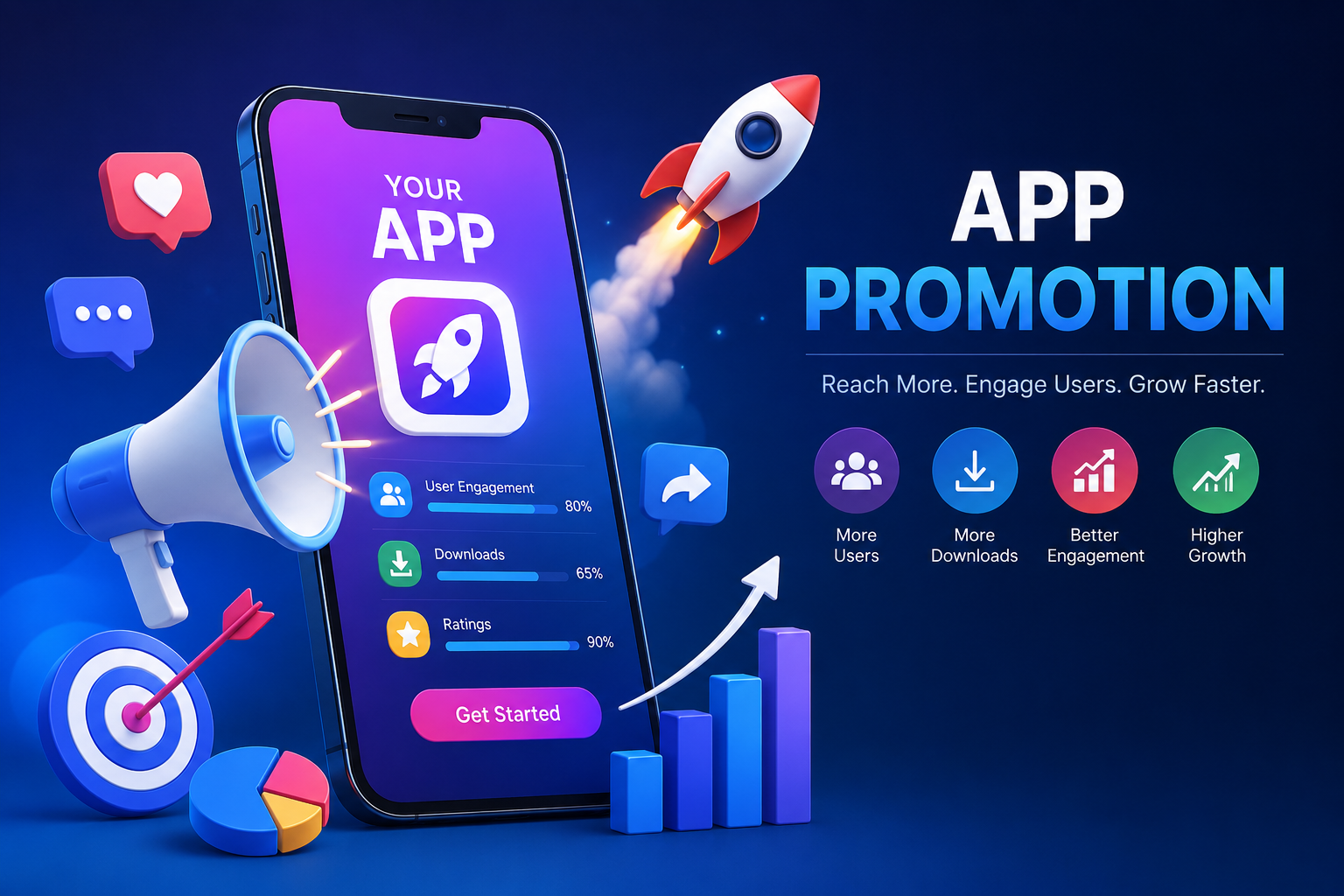
Modern app promotion combines app store visibility, search advertising, social media content, measurement, audience research, and user experience improvements. A clear strategy helps app developers and marketers understand which channels reach appropriate audiences and which actions contribute to meaningful app engagement.
Context
App promotion has developed from simple download-focused advertising into a broader growth discipline. Earlier approaches often emphasized the number of installations, while modern strategies increasingly consider what users do after installing an application. Important measurements can include registration, onboarding completion, content interaction, subscriptions, purchases, or other meaningful in-app actions.
The basic process can be viewed as a sequence:
| Stage | Main Focus | Common Measurement |
|---|---|---|
| Awareness | Introduce the application | Reach, impressions |
| Discovery | Help users find the app | Store views, searches |
| Acquisition | Encourage relevant installations | Installs |
| Activation | Encourage initial use | Sign-ups, onboarding |
| Engagement | Build continued usage | Sessions, active users |
| Retention | Understand returning users | Retention rate |
| Measurement | Evaluate performance | Conversion and attribution data |
App store optimization is another important part of the process. App names, descriptions, screenshots, icons, ratings, reviews, and relevant keywords can influence how users understand an application before installation. Search advertising can complement this visibility by placing app-related messages in relevant digital environments.
Google Ads App campaigns can distribute app advertisements across Google Search, Google Play, YouTube, Discover, the Google Display Network, and other participating environments. Google states that these campaigns can optimize toward goals such as installations or in-app actions.
Importance
App promotion matters because creating an application does not automatically mean that the intended audience will discover or continue using it. A structured approach helps organizations understand user behavior and identify which messages, audiences, and channels are associated with useful outcomes.
The subject affects several groups:
- App developers planning user acquisition
- Marketing teams measuring campaign performance
- Product teams studying onboarding and engagement
- Small organizations building digital applications
- Users who encounter app advertisements and promotional content
A key principle is to distinguish installation volume from user quality. An application may receive many installations but relatively little ongoing activity. For this reason, modern growth strategies frequently examine events after installation.
Measurement should also consider the complete user journey. For example, an educational application might measure installation, account creation, lesson completion, and returning users rather than considering installation as the only meaningful result.
Clear goals are therefore important before selecting channels. Common objectives include increasing awareness, improving app discovery, generating installations, encouraging particular in-app actions, or understanding retention patterns.
Recent Updates
Between 2024 and 2026, app promotion has increasingly focused on automation, privacy-aware measurement, and event-based optimization. Google Ads continues to provide App campaigns that can automatically combine supplied text, images, videos, and app-store assets into different advertising formats.
Automation has also become more important in campaign management. Advertisers can provide conversion events and campaign goals while automated systems help determine where and when advertisements are displayed. Google recommends sending relevant app events back into Google Ads and considering events that represent meaningful user actions.
Privacy has simultaneously become a central part of app growth. On Apple platforms, applications that track users across apps and websites generally need permission through App Tracking Transparency. Apple also requires developers to describe relevant data collection practices through App Store Connect.
Another important development is the increased use of privacy-related declarations for software components. Apple provides privacy manifests and related requirements to improve transparency around data practices and third-party software components.
The broader direction from 2024–2026 can be summarized as:
- Greater use of automated campaign optimization
- More attention to post-install events
- Increased privacy and consent requirements
- Greater emphasis on first-party and responsibly collected data
- More detailed app-store privacy disclosures
- Increased importance of creative assets across multiple formats
These changes mean that effective app promotion increasingly requires coordination between marketing, product, analytics, engineering, and privacy teams.
Laws or Policies
App promotion must follow both advertising rules and data-protection requirements. The exact obligations depend on the countries where an application operates and where its users are located.
Google Ads requires app advertisements to follow its general advertising policies as well as specific app-ad requirements. Google evaluates factors including the advertisement, developer information, app title, icon, installation page, and application itself.
Apple also has specific App Store rules concerning privacy, tracking, user consent, and data use. Developers must obtain appropriate permission for covered tracking activities and accurately describe relevant data practices.
The General Data Protection Regulation, or GDPR, is particularly important when personal data from people in the European Union falls within its scope. Where consent is the legal basis, it must generally be informed, specific, freely given, and clearly presented.
In India, the Digital Personal Data Protection Act, 2023 and the Digital Personal Data Protection Rules, 2025 are relevant to digital personal data practices. The Government of India notified the 2025 Rules on November 14, 2025, with provisions taking effect according to the specified implementation timeline.
Organizations should therefore review applicable privacy laws, advertising policies, app-store requirements, consent mechanisms, and data-handling practices before launching campaigns.
Tools and Resources
Several tools can support different stages of an app promotion strategy:
- Google Ads App campaigns — Useful for app installation and engagement campaigns across Google advertising environments.
- Google Analytics for Firebase — Useful for understanding app events, user journeys, and engagement patterns.
- Google Play Console — Provides information about Android app performance, store listings, users, and technical quality.
- App Store Connect — Used for Apple app management, performance information, privacy declarations, and related app-store activities.
- Apple App Tracking Transparency documentation — Helps developers understand tracking permission requirements.
- Google Ads policy resources — Useful for reviewing advertising requirements before campaign launch.
- Privacy policy templates and legal checklists — Can help teams organize disclosures, although legal review may still be appropriate for specific situations.
A simple measurement spreadsheet can also track impressions, store visits, installations, activation events, retention, and other selected metrics over time.
FAQs
What is app promotion?
App promotion is the process of increasing awareness and discovery of an application and encouraging appropriate users to install and engage with it through channels such as app stores, advertising, content, and search.
What is the difference between app promotion and app store optimization?
App promotion covers multiple growth channels, while app store optimization focuses specifically on improving an application's visibility and presentation within an app marketplace.
Why are post-install events important?
Installations show that someone downloaded an application, but post-install events provide additional information about whether users actually engage with it. Examples include registration, onboarding completion, or repeated use.
How does privacy affect app promotion?
Privacy requirements can influence tracking, attribution, audience measurement, data collection, and consent. Apple, Google Play, and privacy laws in different jurisdictions establish requirements that developers need to consider.
What should be measured in an app growth strategy?
Useful measurements can include impressions, store visits, installations, activation, engagement, retention, and selected in-app conversion events. The appropriate metrics depend on the application's purpose and growth objectives.
Conclusion
Modern app promotion combines discoverability, relevant advertising, useful content, app-store presentation, measurement, and user experience. The strongest strategies focus not only on installations but also on meaningful engagement and responsible data practices.
From 2024 through 2026, automation and privacy-aware measurement have become increasingly important. Developers and marketers should therefore align growth objectives with platform policies, applicable privacy regulations, accurate measurement, and a clear understanding of their intended audience.
A practical starting point is to define one primary growth objective, identify the most meaningful user event, and establish reliable measurement before expanding promotional activity.
Regularly reviewing app-store information, campaign performance, privacy requirements, and user behavior can help maintain a more consistent and informed growth process.