Chromatography Products Guide for Modern Laboratory Analysis and Scientific Research
Chromatography products play an important role in modern laboratory analysis, scientific research, pharmaceutical testing, food quality assessment, and environmental monitoring.
These products help scientists separate, identify, and measure the components of complex mixtures. They include chromatography columns, analytical instruments, solvents, detectors, sample preparation equipment, and laboratory consumables.
Understanding chromatography products helps researchers select suitable equipment and materials for their analytical requirements. Different chromatography techniques support different sample types, measurement goals, and laboratory conditions. This guide explains the fundamentals, importance, recent developments, regulatory considerations, and practical resources associated with chromatography products.
Context
Chromatography is an analytical technique that separates the components of a mixture based on how they interact with two phases: a stationary phase and a mobile phase. The stationary phase remains in place, while the mobile phase moves through or across it, carrying sample components at different rates.
The technique is widely used in chemistry, biology, medicine, food science, and industrial laboratories. Depending on the method, chromatography can help identify substances, measure their concentrations, detect impurities, and assess sample composition.
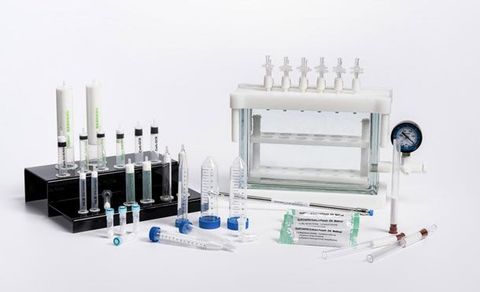
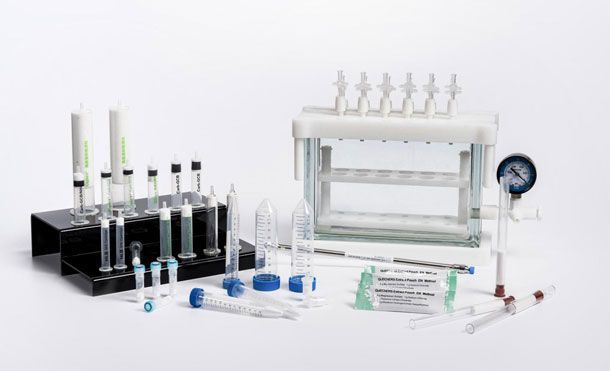
Chromatography products are the instruments, materials, and supporting components required to perform these procedures. Their selection depends on the analytical method, sample characteristics, required sensitivity, and laboratory workflow.
Common chromatography techniques include:
High-performance liquid chromatography (HPLC), which separates compounds carried in a liquid mobile phase.
Gas chromatography (GC), which analyzes suitable volatile and thermally stable compounds.
Thin-layer chromatography (TLC), which separates substances on a coated plate.
Ion chromatography (IC), which measures ions and other ionic compounds.
Size-exclusion chromatography (SEC), which separates molecules according to their size in solution.
Each method has specific requirements for instruments, columns, solvents, and sample preparation materials.
Importance
Chromatography products support accurate and repeatable laboratory measurements. Appropriate equipment and consumables help researchers separate complex mixtures, investigate chemical composition, and monitor changes in samples.
In pharmaceutical research, chromatography can help evaluate active ingredients, impurities, and degradation products. Food laboratories use these techniques to investigate additives, contaminants, flavor compounds, and nutritional components. Environmental laboratories analyze water, soil, and air samples for selected pollutants.
Chromatography also supports biotechnology, forensic science, academic research, and chemical manufacturing. Reliable analytical results can contribute to product quality assessment, scientific discoveries, and regulatory documentation.
The main groups of chromatography products include:
| Product category | Primary purpose | Typical application |
|---|---|---|
| Chromatography columns | Separate mixture components | HPLC, GC, and SEC |
| Detectors | Measure compounds as they emerge | UV, fluorescence, and mass spectrometry |
| Analytical instruments | Control and monitor separation | HPLC and GC analysis |
| Solvents and mobile phases | Transport sample components | Liquid chromatography |
| Sample preparation products | Prepare samples for analysis | Filtration and extraction |
| Vials and fittings | Hold samples and connect components | Routine laboratory workflows |
| Data analysis software | Process and interpret results | Peak integration and reporting |
Choosing suitable products requires attention to chemical compatibility, separation performance, sample volume, operating conditions, and maintenance requirements.
Recent Updates
Chromatography technology continues to develop as laboratories seek improved analytical performance, efficient workflows, and dependable data management. Recent developments include advances in instrument automation, column chemistry, detector integration, and digital analysis.
Modern HPLC systems can use smaller particle-size columns and optimized separation conditions to improve resolution and shorten analysis times in suitable applications. Ultra-high-performance liquid chromatography (UHPLC) uses higher operating pressures and specialized components to support efficient separations.
In gas chromatography, advances in column design, detector sensitivity, and automated sample introduction support the analysis of complex samples. GC systems are also frequently coupled with mass spectrometry (GC-MS) to help identify compounds based on their mass spectra.
Other notable developments include:
Automated sample preparation that reduces repetitive manual work.
Improved stationary-phase materials for specialized separation requirements.
LC-MS and GC-MS integration for more detailed compound identification.
Software tools that support peak analysis, instrument monitoring, and data review.
Reduced-solvent methods and other approaches intended to improve laboratory resource efficiency.
Digital systems can help laboratories manage analytical records and identify instrument performance changes. However, automation does not eliminate the need for method validation, calibration, suitable controls, and trained personnel.
The usefulness of any development depends on the sample, analytical objective, instrument configuration, and applicable laboratory requirements.
Laws or Policies
Chromatography products used in regulated laboratories may be subject to equipment, chemical safety, quality management, and data integrity requirements. The relevant rules depend on the country, industry, intended application, and type of analytical result.
In the United States, the Food and Drug Administration (FDA) establishes requirements for certain pharmaceutical and medical product activities. Laboratories conducting regulated testing may need to follow applicable current good manufacturing practice requirements and electronic record provisions.
FDA regulations under 21 CFR Part 211 address current good manufacturing practice for finished pharmaceuticals. Where applicable, 21 CFR Part 11 addresses electronic records and electronic signatures. These requirements are relevant to qualifying electronic systems and records, not automatically to every chromatography instrument.
The International Council for Harmonisation (ICH) provides guidance on analytical procedures and validation. ICH Q2(R2) addresses validation of analytical procedures, while ICH Q14 addresses analytical procedure development.
Laboratories should also consider:
Chemical handling and workplace safety requirements.
Safety data sheets and appropriate solvent storage procedures.
Calibration, maintenance, and documented instrument checks.
Data integrity, access controls, and record retention.
Environmental rules concerning laboratory chemical waste.
In the European Union, applicable chemical safety and data protection requirements may also affect laboratory operations. Requirements vary by activity and jurisdiction, so laboratories should consult current official guidance before establishing compliance procedures.
Tools and Resources
Reliable technical resources help laboratories understand chromatography methods, compare instrument specifications, develop analytical procedures, and maintain consistent records.
Useful resources include official regulatory guidance, scientific publications, instrument manuals, and laboratory quality documentation. The following resources provide starting points for further study.
| Resource | Main purpose |
|---|---|
| FDA guidance and regulations | Understand applicable US regulatory requirements |
| ICH guidelines | Review analytical procedure development and validation |
| NIST Chemistry WebBook | Research selected chemical properties and reference data |
| PubChem | Explore chemical information and compound records |
| USP analytical standards | Consult applicable compendial requirements |
| Instrument manuals | Review operating procedures and maintenance instructions |
Researchers can also use chromatography data systems to review chromatograms, integrate peaks, compare retention times, and prepare reports. Spreadsheet templates may help organize calibration results, maintenance schedules, sample identifiers, and method validation records.
Before selecting a chromatography product, laboratories should establish clear analytical requirements. Important considerations include sample type, expected concentration range, chemical compatibility, detection limits, separation needs, and regulatory expectations.
A structured evaluation helps prevent compatibility problems and supports reproducible results across laboratory activities.
FAQs
What are chromatography products?
Chromatography products include analytical instruments, columns, detectors, solvents, sample preparation materials, software, and consumables used to separate and analyze mixture components.
Which chromatography technique is suitable for laboratory analysis?
The appropriate technique depends on the sample and analytical objective. HPLC is commonly used for many liquid-phase analyses, while GC is suitable for volatile compounds that can withstand the required temperatures. Other techniques address specific separation needs.
Why are chromatography columns important?
Columns contain the stationary phase that contributes to separating sample components. Column chemistry, dimensions, particle characteristics, and operating conditions influence separation efficiency and resolution.
How do laboratories maintain reliable chromatography results?
Laboratories use appropriate calibration, validated methods where required, system suitability checks, routine maintenance, quality controls, and documented procedures. Analysts should also follow instrument instructions and applicable regulations.
What factors should be considered when selecting chromatography products?
Key factors include sample composition, separation requirements, detection method, chemical compatibility, operating pressure or temperature, reproducibility, maintenance needs, and regulatory requirements.
Conclusion
Chromatography products are essential components of modern analytical laboratories. Instruments, columns, detectors, solvents, and sample preparation materials work together to support the separation and measurement of chemical compounds. Understanding the available techniques helps laboratories align their analytical methods with their research objectives.
Technological developments continue to improve automation, analytical sensitivity, and data management. Nevertheless, reliable results depend on suitable product selection, trained personnel, appropriate quality controls, and consistent laboratory procedures.
Laboratories should evaluate technical specifications alongside safety, compatibility, and applicable regulatory guidance. A careful approach to chromatography products supports accurate measurements, reproducible experiments, and informed scientific conclusions.