Salesforce CRM Overview of Features, Functions, and Modern Business Solutions
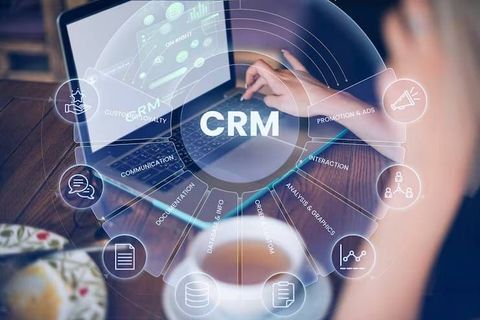
Salesforce CRM is a customer relationship management platform that helps organizations manage customer information, track sales activities, coordinate marketing campaigns, and improve communication across teams.
It brings customer-related data into a shared environment, allowing businesses to understand interactions and organize their daily operations more effectively.
Understanding Salesforce CRM features, functions, and modern business solutions can help beginners, business owners, students, and technology professionals learn how customer relationship management works. This guide explores its main capabilities, business importance, recent technology developments, relevant regulations, and useful resources for learning about the platform.
Context – Understanding Salesforce CRM
Salesforce CRM is a cloud-based customer relationship management platform developed by Salesforce. It helps organizations collect, organize, and analyze information about customers, prospects, accounts, and business interactions. Users can access relevant records through supported web browsers and applications, depending on their organization’s configuration and permissions.
The platform supports different business activities, including sales management, customer support, marketing coordination, analytics, and workflow automation. Rather than maintaining separate records across multiple disconnected systems, organizations can connect relevant information to develop a more complete view of customer relationships.
Salesforce CRM is used by businesses of different sizes and across industries such as retail, financial services, healthcare, manufacturing, education, and technology. Its configuration varies according to business requirements, available products, licensing arrangements, and internal processes.
The primary purpose of CRM technology is to help organizations maintain consistent records, understand customer needs, and coordinate interactions throughout the customer lifecycle.
Importance – Why Salesforce CRM Matters
Customer information often comes from emails, telephone conversations, website forms, marketing campaigns, and internal business applications. Managing these records separately can create duplication, communication gaps, and incomplete reporting.
Salesforce CRM helps address these challenges by bringing relevant information into a structured environment. Authorized employees can review customer histories, record activities, update opportunities, and coordinate follow-up actions.
Its importance can be understood through several business functions.
Customer data management: Organizes contact details, account information, and interaction histories.
Sales planning: Helps teams track potential opportunities, sales stages, and expected outcomes.
Marketing coordination: Supports campaign planning, audience segmentation, and campaign performance analysis through relevant products.
Customer support: Helps authorized teams record cases, monitor progress, and review previous interactions.
Business reporting: Provides dashboards and reports that help managers examine performance indicators.
Workflow automation: Reduces repetitive administrative activities through configured rules and automated processes.
Salesforce CRM can affect employees, managers, business owners, customers, and data protection teams. Its effectiveness depends on accurate records, appropriate access controls, employee training, and well-defined business processes.
Organizations should also recognize that implementing CRM technology does not automatically improve customer relationships. The results depend on how well the platform supports actual business needs and how consistently employees use it.
Recent Updates – Trends and Developments
Modern CRM platforms increasingly combine automation, data analysis, cloud applications, and artificial intelligence. Salesforce has continued developing these capabilities across its product ecosystem, including tools designed to help organizations interpret information and automate selected tasks.
Artificial intelligence is an important development in CRM. Depending on the product, configuration, and subscription, Salesforce capabilities can assist with summarizing records, generating suggested content, analyzing customer interactions, and supporting employee workflows.
Salesforce also develops Agentforce, its platform for building and managing AI agents. These agents can be configured for particular business tasks, subject to defined permissions, available data, and organizational controls. Their use requires careful evaluation because inaccurate outputs or inappropriate actions can affect business operations.
Other significant developments include:
Data integration: Connecting customer information from different applications and systems.
Low-code development: Allowing authorized users to configure workflows and applications with limited traditional programming.
Advanced analytics: Using reports, dashboards, and data analysis to identify patterns and performance changes.
Automated workflows: Coordinating routine activities, approvals, notifications, and record updates.
AI governance: Establishing controls for data access, output quality, human review, and accountability.
The availability of individual features depends on the Salesforce product, release, edition, and configuration. Organizations should consult current product documentation and release notes before making technical decisions.
Laws or Policies – Data Protection and Compliance
Salesforce CRM can contain personal information, business communications, account histories, and other sensitive records. Organizations must therefore consider applicable privacy laws, cybersecurity requirements, and internal information management policies.
Legal responsibilities depend on the organization’s location, industry, data categories, and the countries where its customers are located. Using a CRM platform does not automatically make an organization compliant with every applicable regulation.
Important regulatory considerations include the following.
General Data Protection Regulation (GDPR): Applies to qualifying personal data processing within its scope. It establishes requirements concerning lawful processing, individual rights, security, and accountability.
California Consumer Privacy Act, as amended by the California Privacy Rights Act (CCPA/CPRA): Establishes privacy rights and obligations for businesses covered by the relevant California laws.
India’s Digital Personal Data Protection Act, 2023: Establishes a framework for digital personal data protection in India, alongside applicable rules and commencement notifications.
Industry-specific requirements: Organizations operating in regulated sectors may need to follow additional requirements for records, confidentiality, access, and security.
Practical safeguards include role-based permissions, strong authentication, appropriate retention periods, documented data handling procedures, and periodic access reviews.
Organizations should also evaluate how personal information is used in AI-enabled features. Human oversight, suitable testing, and clear governance policies can help reduce risks associated with inaccurate outputs or unauthorized data access.
Tools and Resources – Learning Salesforce CRM
Learning Salesforce CRM is easier when users combine official documentation with practical exercises. Beginners can start with basic CRM concepts before exploring advanced reporting, automation, and AI capabilities.
The following table summarizes useful resources and their purposes.
Tool or resource | Main purpose |
|---|---|
Salesforce Help | Understand product features and configuration |
Salesforce Trailhead | Follow guided learning modules and exercises |
Salesforce Developer Documentation | Learn about APIs, development, and integrations |
Salesforce Release Notes | Review product changes and new capabilities |
Salesforce Trust | Review platform availability and security information |
Salesforce Architect resources | Explore technical design and system architecture |
Users can develop their knowledge by practicing common CRM tasks, including creating contact records, updating opportunities, preparing reports, and configuring basic workflows in an appropriate learning environment.
A structured learning plan can include these steps:
Learn CRM terminology, including leads, contacts, accounts, and opportunities.
Explore record management and relationships between business data.
Practice building reports and dashboards using sample information.
Study workflow automation and permission settings.
Explore integrations, analytics, and AI capabilities as needed.
Businesses planning a deployment should also document their requirements, identify data migration needs, define user permissions, and establish procedures for maintaining data quality.
FAQs – Salesforce CRM Features and Functions
1. What is Salesforce CRM used for?
Salesforce CRM helps organizations manage customer information, track sales opportunities, coordinate marketing activities, record support cases, and analyze business performance.
2. What are the main features of Salesforce CRM?
Common capabilities include contact management, account records, opportunity tracking, dashboards, reports, workflow automation, and integrations. Additional functions depend on the products and configuration used.
3. Is Salesforce CRM suitable for small businesses?
It can support small businesses as well as larger organizations. Suitability depends on operational requirements, technical resources, available budget, and the complexity of the business processes involved.
4. How does AI support Salesforce CRM?
AI capabilities can assist with summarizing records, generating content, analyzing information, and automating selected tasks. Results depend on the available features, data quality, configuration, and appropriate human oversight.
5. How can beginners learn Salesforce CRM?
Beginners can use Salesforce Trailhead, official product documentation, guided exercises, and practice environments. Starting with basic CRM records and reports provides a foundation for learning more advanced functions.
Conclusion – Salesforce CRM and Modern Business Solutions
Salesforce CRM provides a structured way to manage customer relationships, coordinate business activities, and analyze organizational information. Its combination of data management, automation, reporting, integration, and AI capabilities makes it relevant to many modern business processes.
Understanding the platform requires more than learning individual features. Organizations must also consider data quality, employee training, security, regulatory responsibilities, and the suitability of each capability for their operational requirements.
A practical approach is to begin with essential CRM functions, identify clear business objectives, and expand gradually as requirements develop. Regular reviews of platform documentation and internal procedures can help organizations maintain an informed approach to CRM technology.