Fly Ash Brick Machines Overview: Discover Modern Brick Making Technology and Processes
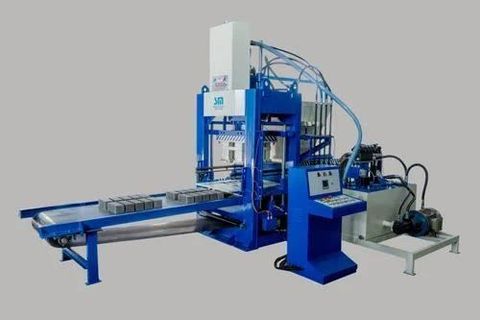
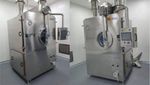
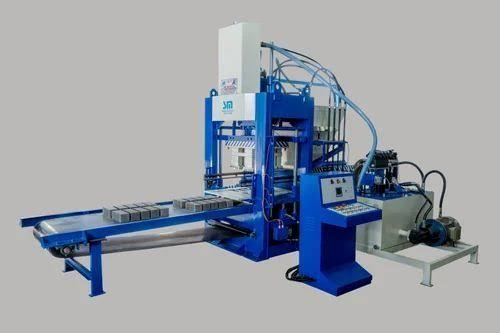
Fly ash brick machines are industrial machines designed to form bricks using fly ash and other selected ingredients such as cement, sand, stone dust, lime, or gypsum, depending on the production method.
These machines use controlled mixing, moulding, and pressing processes to create uniform masonry units.
Fly ash brick manufacturing is connected with the wider use of coal-combustion ash in construction materials. Modern equipment can automate several stages of production, helping maintain consistent dimensions, pressure, and production cycles while reducing variations caused by manual moulding.
Context
Fly ash is a fine material generated during the combustion of coal or lignite in thermal power plants. Because of its physical and chemical characteristics, it can be incorporated into different construction products when suitable formulations and standards are followed.
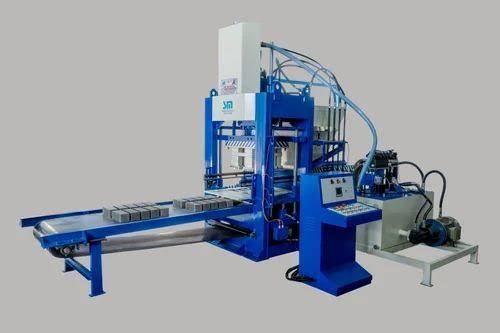
Fly ash brick machines generally work through a sequence that begins with material preparation. The ingredients are measured and mixed with an appropriate quantity of water. The prepared mixture is then transferred into moulds, compressed under controlled pressure, and removed as shaped bricks.
The exact process depends on the machine design and brick formulation. Some systems use hydraulic pressure, while others use mechanical or vibration-assisted mechanisms. Automation levels can also vary from basic semi-automatic arrangements to integrated production lines.
A typical process can include:
- Raw material measurement
- Dry material mixing
- Water addition and blending
- Feeding into moulds
- Hydraulic or mechanical pressing
- Brick ejection
- Initial setting
- Curing
- Quality inspection and storage
The curing stage is particularly important because the bricks need suitable moisture and time to develop their required properties. The final characteristics depend on the raw materials, proportions, compaction, curing conditions, and testing procedures.
Importance
Fly ash brick technology matters because it connects waste-material utilisation with the production of construction materials. India's fly ash management framework specifically identifies fly-ash-based products such as bricks, blocks, tiles, fibre-cement sheets, pipes, boards, and panels as permitted utilisation pathways.
The technology can affect several groups, including brick manufacturers, construction companies, engineers, testing laboratories, architects, infrastructure planners, and thermal power plants.
For construction applications, consistent brick dimensions can simplify masonry work and help maintain predictable wall layouts. However, machine production does not automatically guarantee a particular level of quality. Material composition, mould accuracy, compaction, curing, and laboratory testing all influence the final product.
The following table summarizes important factors:
| Factor | What it influences |
|---|---|
| Fly ash quality | Material consistency and brick characteristics |
| Mix proportion | Strength and durability |
| Moisture level | Compaction and moulding behaviour |
| Pressing pressure | Density and shape |
| Mould dimensions | Brick size and uniformity |
| Curing conditions | Strength development |
| Testing | Verification of physical properties |
A suitable production process therefore involves more than selecting machinery. Operators also need appropriate material handling, process controls, curing arrangements, testing procedures, and workplace safety practices.
Recent Updates
Recent developments in fly ash utilisation have placed greater emphasis on systematic management of ash generated by coal- and lignite-based thermal power plants. India's Ash Utilisation Notification issued on 31 December 2021 requires such thermal power plants to take primary responsibility for environmentally appropriate utilisation of generated ash. The notification identifies fly-ash-based bricks and blocks among the permitted utilisation routes.
Modern brick-making equipment is increasingly designed around process automation. Digital controls, hydraulic systems, automated feeding arrangements, vibration control, and programmable production cycles can reduce variation between production batches.
Another development is the integration of material handling with the brick-forming stage. Automated conveyors, mixers, feeders, and pallet arrangements can create a more continuous workflow.
However, automation should not be confused with guaranteed product performance. Regular inspection and testing remain important because raw-material characteristics can change over time.
Laws or Policies
Fly ash brick manufacturing in India operates within a wider framework of environmental rules, construction standards, and product specifications.
The Ministry of Environment, Forest and Climate Change's 2021 Ash Utilisation Notification states that coal- or lignite-based thermal power plants are primarily responsible for ensuring 100% utilisation of generated ash in an environmentally appropriate manner, subject to the provisions of the notification. It also lists bricks and blocks among fly-ash-based products.
For brick specifications, the Bureau of Indian Standards lists IS 12894:2002 for pulverized fuel ash-lime bricks. The standard covers requirements including classification, general quality, dimensions, and physical requirements.
BIS records also identify IS 16720:2018 for pulverized fuel ash-cement bricks. These standards are relevant when assessing the specifications and testing requirements applicable to particular types of fly ash bricks.
Regulatory requirements can change, and specific construction projects may also be subject to state or local requirements. Manufacturers and construction professionals should therefore consult the current versions of applicable BIS standards and government notifications before making compliance decisions.
Tools and Resources
Several technical resources can help people understand fly ash brick machines, production processes, and material requirements.
Useful resources include:
- Bureau of Indian Standards publications and standards information
- Ministry of Environment, Forest and Climate Change notifications
- Central Pollution Control Board environmental information
- State Pollution Control Board guidance
- Laboratory testing facilities for construction materials
- Technical manuals for hydraulic presses and mixing equipment
- Material testing records for compressive strength and water absorption
BIS laboratory information currently lists testing related to IS 12894 and IS 16720, including parameters such as dimensions, compressive strength, water absorption, and efflorescence for relevant brick specifications.
When evaluating a production process, useful records can include batch proportions, moisture measurements, pressing parameters, curing duration, brick dimensions, and laboratory test results.
FAQs
What is a fly ash brick machine?
A fly ash brick machine is equipment used to mould and compact mixtures containing fly ash and other suitable materials into brick-shaped units. Depending on the design, the machine may use hydraulic pressure, mechanical pressure, vibration, or a combination of these methods.
How are fly ash bricks made?
The general process involves proportioning materials, mixing them with controlled moisture, feeding the mixture into moulds, applying pressure, removing the shaped bricks, and curing them under suitable conditions. Exact formulations vary according to the brick type and applicable specification.
What standards apply to fly ash bricks in India?
Relevant Indian Standards include IS 12894:2002 for pulverized fuel ash-lime bricks and IS 16720:2018 for pulverized fuel ash-cement bricks. The applicable standard depends on the particular brick composition and product category.
Why is curing important for fly ash bricks?
Curing allows the materials in the brick to undergo the reactions needed for strength development. Insufficient or inconsistent curing can affect the physical properties of the finished bricks.
Can automated machines produce identical bricks?
Automation can improve consistency in feeding, moulding, pressure application, and cycle timing. However, final uniformity also depends on material quality, mix proportions, mould condition, machine maintenance, and curing practices.
Conclusion
Fly ash brick machines combine material preparation, moulding, compaction, and production controls to manufacture bricks from fly ash-based mixtures. Their operation is closely connected with material quality, curing practices, product testing, and applicable construction standards.
India's ash utilisation framework gives an important role to fly-ash-based construction products, while BIS standards provide technical references for particular brick categories.
Understanding the complete production process is therefore useful for manufacturers, engineers, construction professionals, and readers researching modern brick-making technology. A properly controlled process considers both machine operation and the characteristics of the finished brick.
For technical or regulatory decisions, current BIS documents and applicable government notifications should be checked because standards, testing arrangements, and environmental requirements can be revised over time.