Industrial Refrigerator Explore Energy Management, Insulation, and Cooling Performance
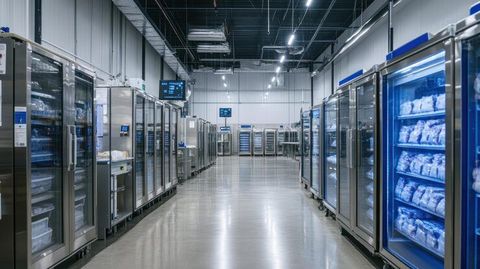
Industrial refrigerators are essential for maintaining controlled temperatures in food processing facilities, warehouses, laboratories, pharmaceutical environments, and manufacturing plants.
Their performance depends on refrigeration technology, insulation quality, energy management, and the ability to maintain stable temperatures under changing operating conditions.
Understanding industrial refrigerator energy management helps facility managers identify energy losses, improve temperature consistency, and maintain suitable storage conditions. An overview of insulation materials, cooling systems, monitoring tools, and relevant regulations provides useful information for understanding modern industrial refrigeration.
Context
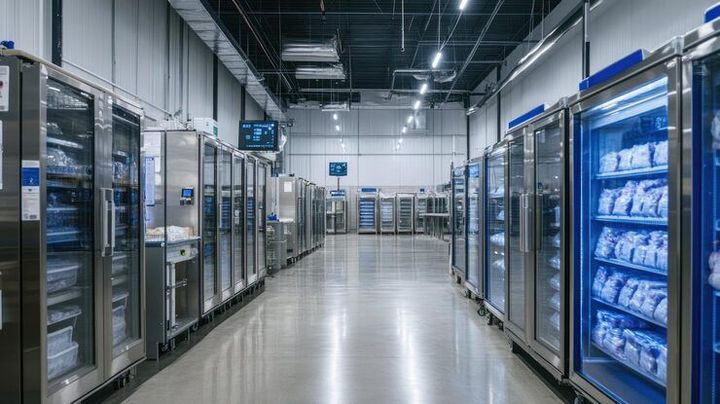
An industrial refrigerator is a large-capacity cooling system designed to maintain low temperatures in environments where domestic refrigerators are unsuitable. These systems include industrial cold rooms, refrigerated storage areas, blast chillers, and specialized cooling units used in manufacturing and scientific applications.
Industrial refrigeration systems commonly use compressors, condensers, evaporators, expansion devices, temperature sensors, and control equipment. Together, these components transfer heat from an enclosed space to the surrounding environment or another heat-rejection system.
Energy management focuses on how efficiently the refrigerator uses electricity to maintain the required temperature. Insulation reduces unwanted heat transfer through walls, ceilings, floors, and doors, while cooling performance determines how effectively the system removes heat from stored products and surrounding air.
Several factors influence industrial refrigerator performance:
The required storage temperature and humidity.
The size and layout of the refrigerated space.
The frequency of door openings and product deliveries.
The quality and thickness of insulation.
The efficiency of compressors, fans, and heat exchangers.
The surrounding temperature and operating environment.
Understanding these factors helps facilities select suitable equipment and develop practical operating procedures.
Importance
Industrial refrigerator energy management is important because refrigeration equipment may operate continuously throughout the year. Inefficient operation can increase electricity consumption, place additional demand on electrical infrastructure, and contribute to unnecessary environmental impacts.
Temperature stability is equally important. Food storage facilities need suitable conditions to maintain product quality, while pharmaceutical and laboratory environments may require carefully controlled temperature ranges for sensitive materials.
Insulation plays a major role in maintaining these conditions. Poorly insulated panels, damaged door seals, thermal bridges, and gaps around pipes can allow heat to enter the refrigerated space. The cooling system must then remove this additional heat, increasing its workload.
Cooling performance also affects operational reliability. An undersized system may struggle during periods of high demand, while an oversized or poorly controlled system may operate inefficiently under partial loads.
The main groups affected include:
Food manufacturers and cold-storage operators.
Pharmaceutical and biotechnology facilities.
Logistics and distribution centers.
Industrial production plants.
Building engineers and energy managers.
Regular monitoring helps these organizations understand equipment performance, recognize unusual energy consumption, and maintain appropriate storage conditions.
Recent Updates
Industrial refrigeration technology continues to develop through improved compressor controls, advanced insulation, refrigerant alternatives, and digital monitoring. These developments focus on reducing energy consumption while maintaining dependable cooling performance.
Variable-speed compressors adjust their output according to cooling demand rather than operating continuously at one fixed speed. Electronic expansion valves and modern control systems can also improve refrigerant flow regulation under changing conditions.
Another development is the adoption of natural and lower-global-warming-potential refrigerants. Ammonia, carbon dioxide, and certain hydrocarbon refrigerants are used in suitable applications, depending on system design, safety requirements, and local regulations. Each refrigerant has specific operating characteristics and installation considerations.
Digital monitoring is becoming more common in larger refrigeration facilities. Connected sensors can record temperature, humidity, pressure, compressor activity, and electricity consumption. Facility managers can analyze this information to identify performance changes and investigate possible faults.
Modern insulation panels may use polyurethane or polyisocyanurate foam, among other materials. Their thermal performance depends on material properties, thickness, installation quality, and moisture protection.
Development | Main purpose | Important consideration |
|---|---|---|
Variable-speed compressors | Match cooling output to demand | Control compatibility |
Improved insulation panels | Reduce heat transfer | Moisture and joint integrity |
Natural refrigerants | Reduce certain environmental impacts | Safety and system design |
Digital monitoring | Track energy and temperature | Sensor accuracy |
Heat recovery | Reuse heat rejected by refrigeration | Availability of useful heat demand |
Predictive maintenance | Identify developing equipment problems | Reliable data and analysis |
These technologies do not produce identical results in every facility. Actual performance depends on the building, operating schedule, maintenance practices, climate, and refrigeration load.
Laws or Policies
Industrial refrigeration systems may be subject to energy-efficiency standards, refrigerant regulations, workplace safety requirements, and food or pharmaceutical storage rules. Applicable requirements depend on the country, facility type, equipment capacity, and refrigerant used.
In the United States, the Environmental Protection Agency (EPA) administers refrigerant-related requirements under the Clean Air Act, including relevant rules for refrigerant handling and the phasedown of hydrofluorocarbons under applicable provisions. EPA requirements may affect refrigerant selection, equipment maintenance, and leak management.
The U.S. Department of Energy establishes energy conservation standards for certain categories of commercial refrigeration equipment. The applicable equipment classification determines whether a particular standard covers a system.
Internationally, the Kigali Amendment to the Montreal Protocol establishes a framework for phasing down hydrofluorocarbon production and consumption. National implementation varies by country.
In India, industrial refrigeration installations may need to consider applicable Bureau of Energy Efficiency guidance, electrical safety requirements, factory regulations, environmental rules, and relevant refrigerant-handling obligations. Food-related facilities must also consider applicable Food Safety and Standards Authority of India requirements.
Important compliance considerations include:
Maintaining required temperature records where applicable.
Following refrigerant handling and leak-control requirements.
Providing appropriate ventilation and safety controls for hazardous refrigerants.
Maintaining electrical systems and pressure equipment according to applicable rules.
Checking local building, fire safety, and environmental requirements.
Facilities should verify current requirements with the relevant authorities and qualified technical professionals. Not every industrial refrigerator is covered by the same standards or regulatory provisions.
Tools and Resources
Industrial refrigerator energy management becomes more practical when operators use reliable measurement tools and reference materials. These resources help assess insulation performance, monitor electricity consumption, and evaluate cooling efficiency.
Useful tools include:
Temperature and humidity data loggers for recording conditions over time.
Electricity meters for measuring refrigeration-system energy consumption.
Thermal imaging cameras for identifying possible insulation defects and thermal bridges.
Pressure and temperature instruments for assessing refrigeration-cycle operation.
Building energy management systems for tracking equipment performance.
Maintenance records for documenting faults, repairs, refrigerant checks, and operating changes.
Several public resources provide technical guidance. The U.S. Department of Energy publishes information about industrial energy efficiency and refrigeration systems. The EPA provides refrigerant regulations and environmental guidance. The International Institute of Refrigeration publishes technical information on refrigeration technology, energy use, and environmental considerations.
Energy and insulation assessment
A basic assessment can compare electricity use with operating conditions and cooling demand. For example, energy consumption can be recorded over several weeks and compared with changes in outdoor temperature, product loading, and door-opening frequency.
The following indicators are useful:
Indicator | What it measures | Why it matters |
|---|---|---|
Electricity consumption | Energy used over a period | Tracks overall demand |
Temperature variation | Difference between target and actual temperature | Indicates temperature stability |
Compressor runtime | Time spent operating | Helps assess cooling demand |
Insulation condition | Integrity of panels, seals, and joints | Identifies potential heat entry |
Refrigeration efficiency | Cooling output relative to energy input | Supports system comparisons |
A simple energy-use calculation is:
Energy intensity = Electricity consumed ÷ Refrigerated area
This produces a measure such as kilowatt-hours per square meter over a specified period. However, comparisons between facilities should account for differences in storage temperature, product throughput, climate, and operating hours.
For more detailed analysis, engineers may calculate a coefficient of performance (COP), which compares useful cooling output with the energy input required to produce it. Higher COP values generally indicate better energy performance under comparable operating conditions.
FAQs
1. What affects industrial refrigerator energy consumption?
Compressor efficiency, insulation quality, ambient temperature, door openings, product loading, and maintenance condition all influence electricity consumption.
2. How does insulation improve cooling performance?
Insulation slows heat transfer into the refrigerated space. This reduces the cooling load and helps maintain stable internal temperatures.
3. Which insulation materials are used in industrial refrigerators?
Common materials include polyurethane foam and polyisocyanurate foam. Material selection depends on thermal performance, fire requirements, moisture exposure, and installation conditions.
4. How can industrial refrigeration efficiency be monitored?
Facilities can monitor electricity consumption, temperature records, compressor runtime, refrigerant-system pressures, and cooling output. Consistent measurements make performance changes easier to identify.
5. Why are refrigerant regulations important?
Refrigerant regulations address environmental impacts, safe handling, and the management of substances that may contribute to ozone depletion or global warming. Requirements depend on the refrigerant and jurisdiction.
Conclusion
Industrial refrigerator energy management combines efficient cooling technology, effective insulation, accurate monitoring, and suitable maintenance practices. Understanding these elements helps facilities maintain temperature stability, reduce unnecessary energy use, and improve equipment reliability.
Developments in variable-speed compressors, lower-impact refrigerants, digital monitoring, and heat recovery continue to influence industrial refrigeration. Their effectiveness depends on appropriate system design, operating conditions, and compliance with applicable regulations.
A structured assessment of insulation, electricity consumption, temperature variation, and refrigeration performance provides a practical starting point for identifying improvement opportunities. Regular reviews also help facility managers maintain safe and consistent storage conditions.