Industrial Additive Manufacturing Overview of Technologies, Benefits, and Industrial Uses
Industrial additive manufacturing is a production approach that creates three-dimensional objects by adding material layer by layer from a digital design. It is used across industries such as aerospace, automotive, healthcare, energy, and industrial equipment manufacturing.
Understanding industrial additive manufacturing technologies helps engineers, designers, and manufacturers identify suitable materials, improve product designs, and evaluate different production methods. This guide explores its basic principles, industrial applications, recent developments, relevant regulations, and practical learning resources.
Context of Industrial Additive Manufacturing
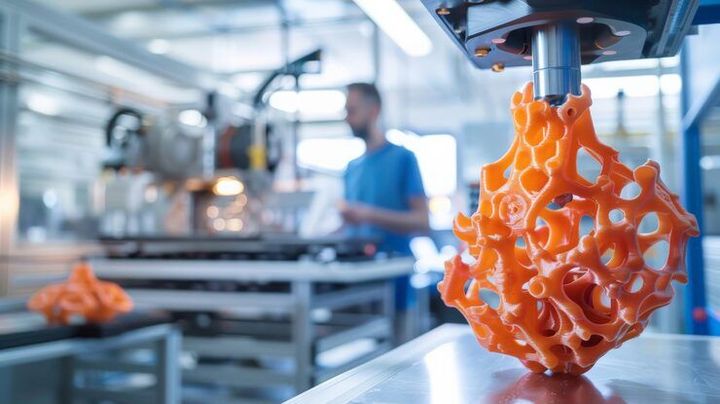
Industrial additive manufacturing, commonly known as industrial 3D printing, converts digital models into physical components through successive layers of material. Unlike traditional manufacturing methods that often remove material through cutting or machining, additive manufacturing builds an object according to a computer-generated design.
The process generally begins with a computer-aided design (CAD) model. Specialized software prepares the model for printing by dividing it into layers and establishing production parameters. A suitable machine then forms the component using plastic, metal, ceramic, or another compatible material.
The purpose of this technology is to produce components with geometries and internal structures that may be difficult to achieve using conventional production methods. It also supports rapid prototyping, customized components, and certain forms of small-batch or specialized manufacturing.
Industrial additive manufacturing includes several technologies, each designed for particular materials and production requirements.
Technology | Main material | Typical industrial use |
|---|---|---|
Fused filament fabrication (FFF) | Thermoplastic filament | Prototypes, fixtures, and tooling |
Selective laser sintering (SLS) | Polymer powder | Functional plastic components |
Laser powder bed fusion (LPBF) | Metal powder | Aerospace and medical components |
Binder jetting | Metal, ceramic, or sand powder | Complex parts and casting molds |
Material jetting | Photopolymers and other compatible materials | Detailed prototypes and models |
Directed energy deposition (DED) | Metal powder or wire | Component repair and large metal structures |
The suitability of each technology depends on the required material properties, component dimensions, surface finish, production volume, and inspection requirements.
Importance of Industrial Additive Manufacturing
Industrial additive manufacturing matters because it expands the range of shapes, structures, and components that engineers can develop. It can support lighter designs, consolidated assemblies, and specialized production processes.
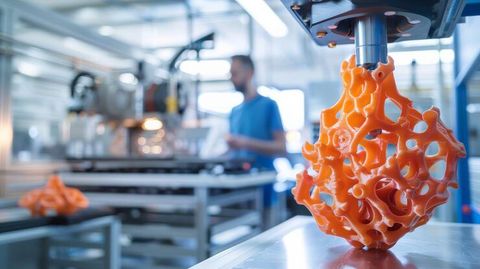
One important advantage is design flexibility. Engineers can create internal channels, lattice structures, and complex geometries that may require multiple operations with traditional manufacturing. In aerospace applications, for example, carefully designed lightweight components can help reduce the mass of certain assemblies.
Another benefit is material efficiency. Additive processes can reduce material removal compared with machining from solid stock, although supports, failed prints, and unused or unrecoverable materials may still generate waste.
The technology also supports shorter development cycles in suitable applications. Engineers can test a prototype, revise its digital design, and produce another version without creating an entirely new set of conventional production tools.
Industrial additive manufacturing affects several groups:
Design engineers developing complex components and prototypes.
Manufacturers evaluating alternative production workflows.
Aerospace and automotive teams seeking lightweight structures.
Healthcare manufacturers producing selected patient-specific devices and implants.
Maintenance teams investigating component repair and replacement strategies.
Quality specialists responsible for material testing and production consistency.
However, additive manufacturing is not appropriate for every component. Production speed, material qualification, equipment capacity, surface finishing, and inspection needs can make conventional methods more suitable for some applications.
Recent Updates in Industrial Additive Manufacturing
Recent developments in industrial additive manufacturing focus on process reliability, automation, material development, and the production of larger or more complex components. Manufacturers are also working to integrate additive systems into established industrial workflows.
Emerging Technologies and Production Trends
One significant development is the use of process monitoring. Sensors and imaging systems can observe printing conditions, identify unusual behavior, and help engineers investigate defects. These systems can improve process understanding, but they do not eliminate the need for validation and inspection.
Another trend is multi-laser metal printing. Some powder bed fusion systems use multiple lasers to process different regions of a component. Depending on machine design and production parameters, this can increase throughput, although consistent quality across the build remains essential.
Digital manufacturing systems are also becoming more connected. Production data, machine settings, material records, and inspection results can be combined to improve traceability and repeatability.
Other important developments include:
Improved metal powders and engineering polymers.
Greater use of automated powder handling and component removal.
Simulation software for predicting thermal behavior and deformation.
Additive manufacturing for selected spare parts and repair operations.
Hybrid machines combining additive deposition with conventional machining.
Artificial intelligence and machine learning are being explored for defect detection, parameter optimization, and production monitoring. Their effectiveness depends on reliable data, appropriate validation, and the characteristics of the specific manufacturing process.
Despite these advances, industrial adoption still requires careful evaluation. Repeatable material properties, certification, machine calibration, and post-processing remain important considerations.
Laws or Policies for Industrial Additive Manufacturing
Industrial additive manufacturing is influenced by product safety requirements, occupational health rules, environmental regulations, and industry-specific standards. Applicable requirements vary according to the country, material, manufacturing process, and intended use of the component.
In the United States, the Occupational Safety and Health Administration (OSHA) provides workplace safety requirements relevant to manufacturing environments. Metal powders, lasers, heated components, chemical substances, and airborne particles may require specific risk controls.
In the European Union, machinery safety, chemical management, workplace protection, and product-specific legislation may apply. The EU Machinery Regulation (EU) 2023/1230 generally applies from 20 January 2027, replacing the earlier Machinery Directive for covered products. Manufacturers should check the applicable transition requirements and product scope.
International standards also help organizations establish consistent manufacturing practices.
Standard or organization | Relevance |
|---|---|
ISO/ASTM 52900 | General principles and terminology for additive manufacturing |
ISO/ASTM 52920 | Qualification principles for industrial additive manufacturing processes and production sites |
ISO/ASTM 52901 | Requirements for purchased additive manufacturing parts |
ASTM International | Technical standards for materials, processes, and testing |
OSHA | Workplace safety requirements in the United States |
EASA and FAA | Aviation regulations and applicable aircraft component approval requirements |
Standards do not automatically replace legal obligations. A manufacturer must determine which standards are appropriate for its application and whether specific regulations, certifications, or customer requirements apply.
For safety-critical aerospace, medical, and energy components, documentation and traceability are particularly important. Material batches, machine settings, build records, heat treatments, and inspection results may need to be retained as part of the quality system.
Tools and Resources for Industrial Additive Manufacturing
Several digital tools and technical resources help users understand, plan, and evaluate additive manufacturing projects.
CAD software is used to create and revise three-dimensional models. Slicing software prepares designs for production by defining layer geometry and process instructions. Simulation tools help engineers assess thermal effects, deformation, and potential design limitations.
Useful resource categories include:
CAD and design tools for creating printable component models.
Slicing software for preparing builds and managing machine parameters.
Material databases for comparing mechanical and thermal properties.
Simulation platforms for evaluating component performance.
Inspection tools for dimensional measurement and defect analysis.
Technical standards for establishing quality and process requirements.
Educational and standards resources include the following organizations:
NIST, the US National Institute of Standards and Technology, for research on advanced manufacturing and measurement science.
ASTM International for additive manufacturing terminology and technical standards.
ISO for international manufacturing standards.
America Makes for additive manufacturing research and industry collaboration.
The European Union's EUR-Lex database for official EU legislation.
When evaluating a manufacturing project, teams should compare material suitability, component geometry, dimensional tolerances, build volume, production repeatability, and post-processing requirements. A structured assessment helps determine whether additive manufacturing is suitable or whether a conventional method is more appropriate.
FAQs About Industrial Additive Manufacturing
1. What is industrial additive manufacturing?
Industrial additive manufacturing is a production method that creates physical components layer by layer from digital designs. It uses technologies such as metal powder bed fusion, polymer powder printing, and directed energy deposition.
2. Which industries use industrial additive manufacturing?
Aerospace, automotive, healthcare, energy, industrial equipment, and research organizations use additive manufacturing for selected components, prototypes, tooling, and specialized production tasks.
3. What materials are used in industrial 3D printing?
Common materials include thermoplastics, engineering polymers, stainless steel, titanium alloys, aluminum alloys, nickel-based alloys, ceramics, and certain composite materials. The available options depend on the machine and printing technology.
4. What are the main benefits of additive manufacturing?
Potential benefits include design flexibility, reduced material removal, component consolidation, rapid prototyping, and customized geometries. Actual results depend on the application, production conditions, and finishing requirements.
5. What are the main limitations of industrial additive manufacturing?
Limitations include restricted build dimensions, material and equipment requirements, surface-finish challenges, production variability, and the need for post-processing. Some components remain more suitable for conventional manufacturing methods.
Conclusion
Industrial additive manufacturing is an important part of modern manufacturing because it enables the production of complex geometries, supports rapid design development, and expands options for specialized components. Its technologies range from polymer printing to advanced metal deposition, with each method serving different industrial requirements.
Successful implementation requires more than selecting a suitable printer. Material selection, digital design, process validation, worker safety, quality control, and regulatory compliance all contribute to reliable production.
Organizations evaluating this technology should begin with a clearly defined application and compare additive methods with conventional alternatives. A careful assessment of technical requirements and production objectives can help determine where industrial additive manufacturing provides meaningful advantages.