Industrial Equipment Manufacturers Overview of Machinery, Production Systems, and Industrial Innovations
Industrial equipment manufacturers play an important role in modern industry by developing machinery, production systems, and specialized equipment for different industrial applications.
Their work supports sectors such as manufacturing, construction, agriculture, energy, food processing, transportation, and material handling. Understanding industrial equipment manufacturers helps readers learn how machinery is designed, produced, operated, and maintained.
Industrial machinery continues to evolve as businesses adopt automation, digital monitoring, energy-efficient equipment, and advanced manufacturing techniques. These developments influence production methods, workplace safety, product quality, and resource management. This overview explains the purpose of industrial equipment manufacturers, their importance, recent technological developments, relevant regulations, and useful tools for understanding industrial production systems.
Context of Industrial Equipment Manufacturers
Industrial equipment manufacturers are organizations that design, assemble, test, and produce machines or systems used in industrial operations. Their products range from individual mechanical components to complex automated production lines. Depending on the application, equipment may operate manually, mechanically, electrically, hydraulically, pneumatically, or through computer-controlled systems.
The history of industrial equipment manufacturing is closely connected to the Industrial Revolution, when mechanical systems gradually replaced many manual production processes. Over time, electrical motors, electronic controls, programmable logic controllers, robotics, and computer-aided design transformed machinery development.
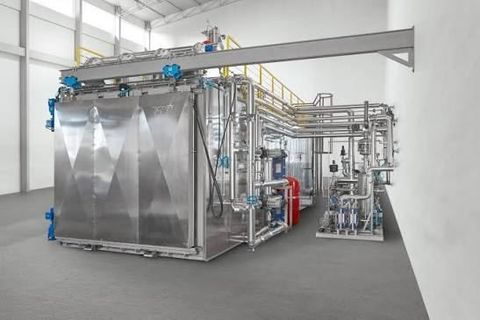
Today, manufacturers create equipment for different production requirements. Examples include CNC machining centers, industrial pumps, compressors, packaging machines, conveyor systems, robotic arms, injection molding machines, and material-processing equipment.
The primary purpose of industrial machinery is to perform specific tasks with suitable levels of precision, consistency, productivity, and operational safety. Equipment selection depends on the materials being processed, production volume, operating environment, technical specifications, and applicable regulations.
Industrial equipment manufacturers may specialize in a single category or produce machinery for several industries. Their work can include mechanical design, component integration, assembly, performance testing, technical documentation, and instructions for safe operation.
Importance of Industrial Equipment Manufacturers
Industrial equipment manufacturers support production activities across the global economy. Machinery helps organizations process raw materials, manufacture components, package products, move materials, and maintain essential infrastructure.
One major benefit of industrial machinery is consistency. Automated equipment can repeat defined operations with controlled settings, helping production teams maintain product specifications. Precision machinery also supports applications where small measurement differences can affect performance, such as automotive components, electronics, and medical-device manufacturing.
Industrial equipment is also important for workplace safety. Properly designed machines can reduce exposure to hazardous processes, heavy lifting, excessive heat, and repetitive physical activities. However, equipment must be installed, operated, and maintained correctly to achieve these benefits.
The industry affects several groups:
Manufacturers that depend on reliable production systems.
Engineers responsible for machinery design and integration.
Maintenance teams that monitor equipment condition.
Workers who operate machinery and handle materials.
Regulators responsible for workplace and environmental requirements.
Researchers developing advanced production technologies.
Equipment selection can influence energy consumption, material waste, production schedules, and maintenance requirements. For this reason, organizations typically evaluate technical suitability, reliability, safety, expected operating conditions, and the availability of replacement components before adopting a machine.
Recent Updates in Industrial Machinery and Production Systems
Industrial equipment manufacturing is changing through automation, connected devices, data analysis, and improved energy management. These developments are helping industrial operators understand production performance and identify potential operational problems.
Automation, Robotics, and Smart Manufacturing
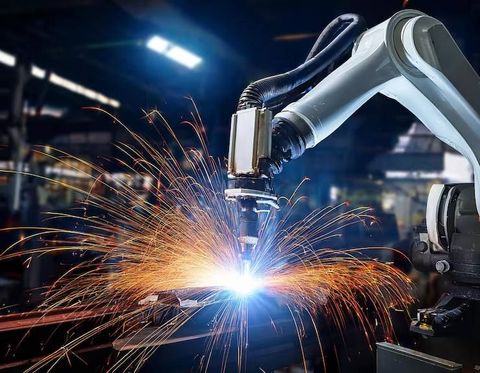
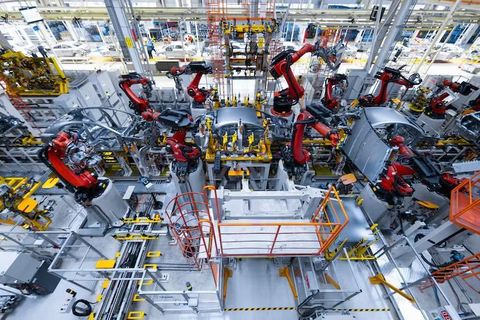
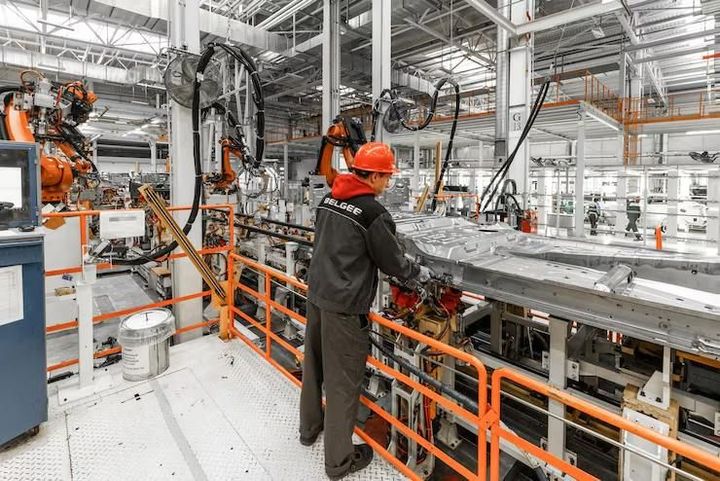
Industrial robots perform tasks such as welding, assembly, material handling, painting, and packaging. Collaborative robots, often called cobots, are designed for certain applications in which people and robotic systems work in nearby areas under appropriate safety controls.
Smart manufacturing connects machinery, sensors, software, and production systems to collect and analyze operational data. Industrial Internet of Things technology allows connected equipment to communicate information such as temperature, vibration, pressure, operating speed, and energy consumption.
Predictive maintenance uses equipment data and analytical methods to estimate when a component may require attention. Unlike maintenance based only on fixed schedules, this approach can help teams identify developing faults before they cause unexpected interruptions. Its effectiveness depends on sensor quality, data accuracy, and suitable analytical methods.
Energy Efficiency and Advanced Manufacturing
Energy efficiency is another important development. Manufacturers are exploring variable-frequency drives, efficient electric motors, improved insulation, optimized compressed-air systems, and better process controls to reduce unnecessary energy consumption.
Additive manufacturing, commonly known as 3D printing, is also used for selected components, prototypes, tooling, and specialized parts. It can support complex geometries and reduce certain material losses, although its suitability depends on the material, component size, production volume, and required mechanical properties.
The following table summarizes important industrial equipment categories and their common applications.
| Equipment category | Typical application | Relevant development |
|---|---|---|
| CNC machinery | Precision cutting and machining | Digital programming and process monitoring |
| Industrial robotics | Assembly and material handling | Adaptive automation |
| Pumps and compressors | Fluid and gas movement | Energy-efficient controls |
| Packaging machinery | Filling, sealing, and labeling | Automated inspection |
| Conveyor systems | Material transportation | Sensor-based monitoring |
| Industrial inspection equipment | Quality measurement | Machine vision and data analysis |
| Processing machinery | Mixing, forming, and material treatment | Improved process control |
These developments do not eliminate every operational challenge. Integration with older equipment, cybersecurity, employee training, and data management remain important considerations when implementing modern production technologies.
Laws or Policies Affecting Industrial Equipment Manufacturers
Industrial equipment manufacturers must consider the legal and technical requirements applicable to their products, manufacturing facilities, intended markets, and operating environments. Requirements vary by country, equipment category, and industrial application.
In the United States, the Occupational Safety and Health Administration (OSHA) establishes workplace safety requirements. Relevant provisions include machine guarding under 29 CFR 1910.212 and control of hazardous energy under 29 CFR 1910.147. These requirements address risks associated with moving machinery and unexpected equipment startup during maintenance.
The European Union has machinery safety legislation covering the design and placing of machinery on the market. Regulation (EU) 2023/1230 on machinery is scheduled to apply from 20 January 2027, replacing the Machinery Directive 2006/42/EC from that date. Manufacturers placing machinery on the EU market should verify which requirements apply to their products and when.
In India, industrial equipment may be subject to requirements under the Factories Act, 1948, applicable state factory rules, electrical safety regulations, environmental legislation, and relevant Bureau of Indian Standards requirements. The Occupational Safety, Health and Working Conditions Code, 2020, is also part of India's evolving occupational safety framework; its applicability should be checked against current commencement notifications and implementing rules.
Other relevant frameworks include ISO 12100 for machinery risk assessment and risk reduction, ISO 13849-1 for safety-related control systems, and ISO 14001 for environmental management systems. These standards have different scopes, and their use does not automatically establish compliance with every applicable law.
Manufacturers and industrial operators should assess requirements relating to:
Machine guarding, emergency stops, and safe operating procedures.
Electrical protection and hazardous-energy isolation.
Equipment testing, technical documentation, and conformity assessment.
Noise, emissions, waste management, and energy use.
Worker training, inspections, and maintenance records.
Regulatory obligations should be verified using official government publications and the relevant standards organizations.
Tools and Resources for Industrial Equipment Knowledge
Technical resources help engineers, students, operators, and industrial planners understand machinery specifications and production requirements. Reliable information is particularly important when evaluating equipment safety, performance, and regulatory compliance.
Useful resources include:
International Organization for Standardization (ISO): information about machinery safety, quality management, and environmental management standards.
Occupational Safety and Health Administration (OSHA): workplace safety regulations, machine-guarding guidance, and hazardous-energy control information.
European Commission: official information on European machinery legislation and product conformity requirements.
Bureau of Indian Standards (BIS): Indian standards, technical specifications, and conformity-related information.
U.S. Department of Energy: industrial energy-efficiency guidance and resources for motor-driven systems.
National Institute of Standards and Technology (NIST): manufacturing research, measurement science, and smart manufacturing resources.
Computer-aided design (CAD) software supports equipment modeling and mechanical design. Computer-aided manufacturing (CAM) software helps prepare manufacturing operations, while programmable logic controllers (PLCs) manage automated machine sequences.
Manufacturing execution systems (MES) track production activities, and computerized maintenance management systems (CMMS) organize equipment records, inspections, and maintenance schedules.
When comparing technical specifications, readers should examine rated capacity, operating speed, power requirements, dimensions, environmental limits, accuracy, safety features, and maintenance instructions. These details provide a clearer basis for understanding whether a machine is appropriate for a particular industrial application.
FAQs About Industrial Equipment Manufacturers
1. What do industrial equipment manufacturers produce?
They produce machinery, mechanical components, automated systems, and specialized equipment used in manufacturing, construction, energy, agriculture, food processing, and other industrial sectors.
2. Which industries use industrial machinery?
Common users include automotive manufacturers, electronics producers, food processors, pharmaceutical manufacturers, construction companies, mining operations, and energy facilities.
3. How does automation affect industrial equipment manufacturing?
Automation can improve repeatability, support higher production throughput, and reduce some repetitive manual tasks. Its results depend on equipment design, process suitability, integration, and workforce training.
4. What is predictive maintenance in industrial production?
Predictive maintenance uses equipment measurements and analytical methods to identify possible failures before they interrupt operations. Common data sources include vibration, temperature, pressure, and motor performance.
5. How can readers check industrial machinery safety requirements?
Readers can consult applicable government regulations, official standards organizations, manufacturer documentation, and qualified safety professionals. Requirements should be checked for the equipment's intended use and operating location.
Conclusion
Industrial equipment manufacturers contribute to modern production by developing machinery, automated systems, and specialized tools for a wide range of industries. Their work influences manufacturing consistency, operational efficiency, workplace safety, and the use of energy and materials.
Automation, connected sensors, predictive maintenance, and advanced manufacturing are changing how industrial equipment is designed and operated. Understanding these developments helps readers evaluate production technologies and their practical applications.
Regulatory awareness is equally important. Manufacturers and equipment operators need to consider applicable safety standards, environmental requirements, technical documentation, and maintenance practices throughout the equipment lifecycle.
For further learning, readers can explore official government publications, recognized technical standards, and manufacturing research resources. These sources provide a reliable foundation for understanding industrial machinery, production systems, and continuing technological developments.

You May Also Like