Industrial Automation Machinery Guide: Explore Types, Uses, Systems, and Modern Technology
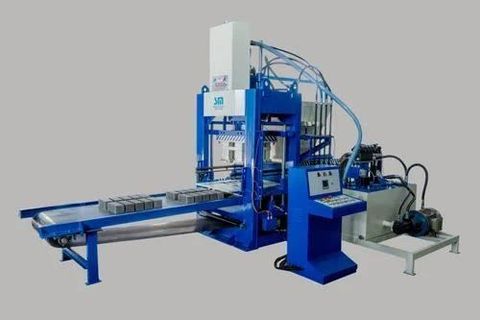
Industrial automation machinery combines mechanical equipment, electrical systems, software, sensors, and control technologies to perform manufacturing and industrial tasks with reduced manual intervention.
An Industrial Automation Machinery Guide helps explain the main types, uses, systems, and modern technologies used across factories and processing environments.
Automation can range from a single automated machine to a connected production system involving robots, programmable logic controllers, industrial networks, sensors, and monitoring platforms. The appropriate arrangement depends on the production process, operating conditions, safety requirements, and technical objectives.
Context – Understanding Industrial Automation Machinery
Industrial automation machinery refers to equipment and integrated systems designed to control or perform industrial processes automatically. Automation can be used for material handling, assembly, machining, packaging, inspection, process control, and many other applications.
The development of industrial automation has progressed from basic mechanical control systems to programmable electronic controllers, industrial robots, computer-based monitoring, and connected digital systems.
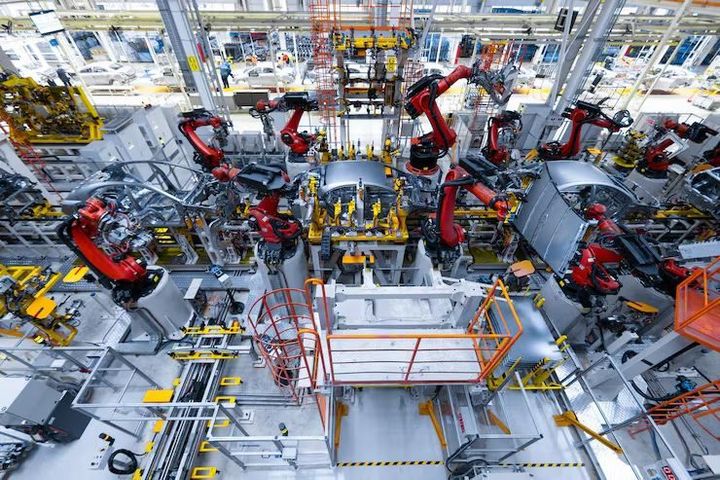
A typical automated production environment can contain several layers. Sensors collect information from equipment and processes, controllers interpret inputs and execute programmed instructions, and actuators perform physical actions.
| Automation component | Main function | Typical examples |
|---|---|---|
| Sensors | Detect physical conditions | Temperature, pressure, proximity, vision |
| PLCs | Control machine operations | Programmable logic controllers |
| Robots | Perform programmable physical tasks | Articulated, SCARA, delta robots |
| Actuators | Create mechanical movement | Motors, pneumatic cylinders |
| HMI | Allow operator interaction | Touchscreen control panels |
| Industrial networks | Connect equipment | Ethernet-based industrial networks |
| SCADA | Monitor and supervise processes | Supervisory control systems |
Industrial automation machinery may also include variable-frequency drives, motion controllers, industrial computers, machine vision systems, safety controllers, conveyors, and automated inspection equipment.
Importance – Why Industrial Automation Matters
Industrial automation can influence productivity, consistency, workplace safety, process monitoring, and resource management. Its importance varies according to the industry and the type of production process.
Automated systems can repeat programmed operations with consistent parameters. This can be useful for applications requiring controlled movement, accurate positioning, timed sequences, or repeated inspection.
Automation can also help reduce direct human exposure to certain industrial environments. Robots and remotely controlled machinery may perform tasks involving heat, repetitive movement, hazardous substances, heavy loads, or restricted areas.
Industries using automation technologies include:
Automotive manufacturing
Food and beverage processing
Pharmaceutical production
Electronics manufacturing
Chemical processing
Packaging
Metalworking
Warehousing and material handling
Energy and utilities
The benefits and limitations depend on system design. Automation does not eliminate the need for people. Engineers, operators, technicians, programmers, safety specialists, and maintenance personnel remain important for planning, supervision, troubleshooting, and system improvement.
Recent Updates – Modern Automation Technology
Industrial automation is increasingly connected with artificial intelligence, machine vision, industrial Internet of Things technologies, robotics, digital twins, edge computing, and advanced data analytics.
Industrial Internet of Things systems connect machines, sensors, controllers, and software so that operational information can be collected and analyzed. Edge computing can process selected information close to the equipment rather than sending every data point to a distant computing environment.
Machine vision is another important development. Cameras and image-processing systems can inspect products, identify patterns, measure dimensions, and detect certain visible defects.
Collaborative robots, commonly called cobots, are designed for applications where humans and robotic systems may work in close proximity under appropriate safety conditions. Their actual deployment still requires risk assessment and compliance with applicable safety requirements.
Artificial intelligence is also being explored for predictive maintenance, quality inspection, process optimization, anomaly detection, and production analysis. However, AI-based automation requires appropriate data, validation, monitoring, cybersecurity controls, and human oversight.
Digital twins can provide virtual representations of equipment or processes. They may be used for simulation, analysis, commissioning, monitoring, and planning, depending on the implementation.
Laws or Policies – Automation Safety and Standards
Industrial automation machinery must be designed and operated with applicable workplace safety, machinery, electrical, environmental, and industry-specific requirements in mind. The exact requirements depend on the country, machine type, workplace, and application.
In the United States, the Occupational Safety and Health Administration provides requirements and guidance covering areas such as machine guarding, electrical safety, control of hazardous energy, and workplace safety.
Internationally, ISO and IEC standards provide technical frameworks relevant to industrial machinery and automation. Examples include standards covering machinery safety, functional safety, industrial control systems, and robot safety.
In India, industrial workplaces can also be subject to national and state-level requirements relating to occupational safety, machinery, electrical systems, and environmental protection. The Occupational Safety, Health and Working Conditions Code, 2020 is part of India's broader framework for workplace health and safety.
Cybersecurity is increasingly relevant because connected automation systems can communicate through industrial networks and external infrastructure. Security practices may include network segmentation, controlled access, authentication, patch management, monitoring, backups, and incident-response planning.
Organizations should identify the regulations and standards applicable to their particular machinery and operating environment rather than assuming that one standard applies universally.
Tools and Resources – Industrial Automation Learning
Several technical resources can help readers understand industrial automation machinery and modern control systems.
Manufacturer documentation can provide information about controllers, sensors, drives, robots, communication protocols, and programming environments. Standards organizations provide technical references for safety and engineering practices.
Useful learning areas include:
PLC programming and control logic
Industrial networking
Robotics and motion control
Machine vision
Functional machine safety
Industrial cybersecurity
SCADA and HMI systems
Sensors and instrumentation
Predictive maintenance
Digital twins and simulation
Engineering teams may also use electrical design software, PLC development environments, robot simulation platforms, digital-twin tools, industrial network analyzers, and condition-monitoring systems.
A structured learning process can begin with basic electrical and mechanical concepts, followed by PLCs and sensors. Learners can then explore motion control, robotics, networking, safety systems, and industrial data technologies.
FAQs – Industrial Automation Machinery
What is industrial automation machinery?
Industrial automation machinery consists of equipment and control technologies that perform or regulate industrial processes with limited direct manual intervention. It can include robots, PLCs, sensors, drives, conveyors, and monitoring systems.
What are the main types of industrial automation?
Common categories include fixed automation, programmable automation, flexible automation, process automation, robotic automation, and integrated production systems. The appropriate type depends on production requirements and process characteristics.
What is a PLC used for?
A programmable logic controller receives signals from sensors and executes programmed control logic. It can then control equipment such as motors, valves, actuators, conveyors, and other machinery.
How is artificial intelligence used in industrial automation?
AI can support applications such as visual inspection, anomaly detection, predictive maintenance, process analysis, and optimization. Its usefulness depends on data quality, system design, validation, and appropriate operational controls.
Why is cybersecurity important for automated machinery?
Connected industrial systems can contain controllers, computers, networks, and remote communication pathways. Cybersecurity measures help protect these systems against unauthorized access, disruption, manipulation, and data-related risks.
Conclusion – Industrial Automation Machinery Guide
Industrial automation machinery combines mechanical equipment, control systems, sensors, software, robotics, networking, and monitoring technologies to automate industrial processes. Modern automation increasingly incorporates connected devices, machine vision, artificial intelligence, edge computing, and digital-twin technologies.
Understanding the relationship between sensors, controllers, actuators, networks, and supervisory systems is useful for anyone studying industrial automation. Safety, cybersecurity, maintenance, and regulatory requirements should also be considered as part of system planning.
Automation technology continues to develop as manufacturers seek more connected and data-driven production environments. However, each automation application requires evaluation of its technical requirements, operating conditions, safety risks, and applicable standards.

You May Also Like