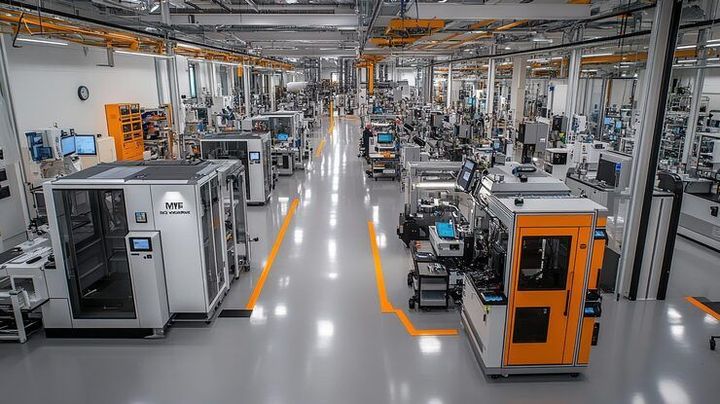
A Comprehensive Guide to Industrial Factory Floor Machinery
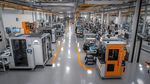
Industrial factory floor machinery forms the physical foundation of modern manufacturing and production plants. These heavy-duty mechanical, electrical, and automated systems transform raw materials into finished goods across sectors ranging from automotive assembly to food processing.
Understanding how these machines operate, evolve, and comply with safety standards helps general readers, students, and facility planners grasp the mechanics of global production.
Context
Industrial factory floor machinery refers to the heavy equipment, automated lines, and specialized tools arranged inside a manufacturing facility to perform repetitive or high-precision tasks. Historically, factory equipment evolved from water-powered looms and steam engines during the First Industrial Revolution into electrically driven assembly lines in the twentieth century. Today, these systems integrate programmable logic controllers, hydraulics, pneumatics, and robotics to execute complex fabrication workflows.
The primary purpose of industrial factory floor machinery is to standardize production while maximizing throughput and precision. Instead of relying solely on manual labor for strenuous or microscopic operations, factories deploy dedicated machines to cut, shape, assemble, package, and inspect materials. Each piece of equipment fits into a broader floor layout designed to minimize material travel distance and prevent production bottlenecks.
Common Categories of Floor Equipment
Material handling systems such as overhead cranes, automated guided vehicles, and belt conveyors that transport raw inputs and finished items between workstations.
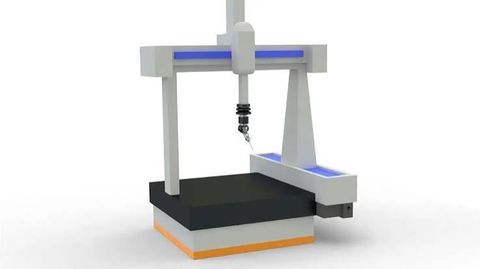
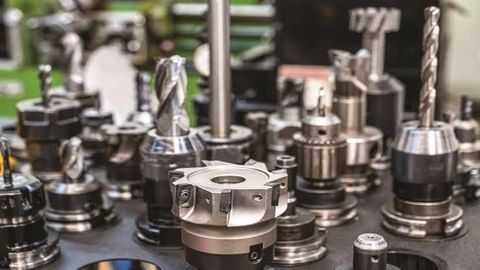
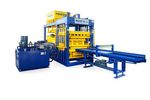
Forming and cutting machines including CNC milling centers, hydraulic presses, laser cutters, and lathes that shape metal, plastic, or composite materials.
Assembly and joining equipment such as robotic welding arms, automated fastening stations, and industrial adhesives applicators that combine individual parts into complete units.
Packaging and inspection units including vision-guided sorting cameras, palletizers, and shrink-wrapping machines that prepare final goods for distribution.
Importance
Industrial factory floor machinery directly governs the speed, consistency, and volume at which everyday goods reach consumers. Without reliable mechanical systems, essential items such as pharmaceuticals, packaged foods, electronics, and construction materials could not be produced at scale. Efficient equipment ensures uniform quality across millions of units while reducing raw material waste during fabrication.
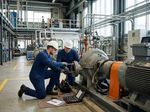
The impact of factory machinery extends across multiple groups within the economy and society. Plant engineers and maintenance technicians interact daily with these systems to keep production schedules running smoothly and safely. Supply chain managers, local communities, and end consumers also depend on steady factory output to maintain stable product availability and regional economic activity.
| Machinery Category | Primary Function | Key Operational Benefit |
| CNC Machining Centers | Subtractive metal and plastic shaping | High dimensional accuracy and repeatability |
| Conveyor Systems | Continuous horizontal and inclined transport | Reduced manual handling and steady workflow |
| Articulated Robots | Welding, painting, and precision assembly | Consistent performance in hazardous environments |
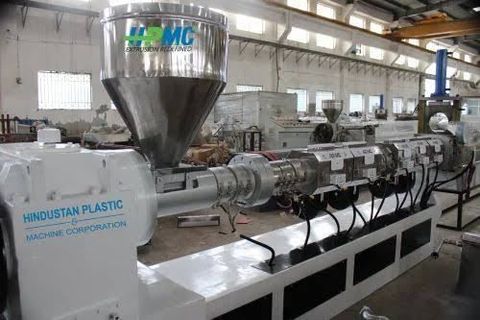
| Injection Molding Presses | High-volume plastic component formation | Rapid cycle times for complex geometries |
| Automated Optical Inspection | Surface and dimensional defect detection | Immediate identification of production flaws |
Recent Updates
Modern factory floors are undergoing rapid digital transformation through the adoption of Industrial Internet of Things sensors and edge computing. Manufacturers increasingly retrofit legacy equipment with vibration, temperature, and acoustic sensors to monitor operational health in real time. This continuous data stream enables predictive maintenance, allowing technical teams to address worn bearings or misaligned shafts before an unexpected breakdown halts production.
Another major development involves collaborative robotics and flexible manufacturing cells. Unlike traditional caged industrial robots that operate in isolation, modern collaborative robots feature force-limiting sensors that allow them to work safely alongside human operators. In addition, modular machine designs let facilities quickly reconfigure assembly lines to handle smaller batch sizes and customized product variations without extensive downtime.
Energy efficiency and sustainable engineering have also become central priorities in equipment design. Newer electric servo drives are steadily replacing older hydraulic systems in many pressing and molding applications because servo motors consume power only during active movement. Manufacturers also implement regenerative braking systems on cranes and conveyors to capture kinetic energy and feed electricity back into the plant grid.
Laws or Policies
The operation of industrial factory floor machinery is governed by strict occupational safety, electrical, and environmental regulations designed to protect workers and surrounding communities. In the United States, the Occupational Safety and Health Administration enforces standard 29 CFR 1910 Subpart O, which mandates physical machine guarding around pinch points, rotating shafts, and cutting blades. Facilities must also follow strict Lockout and Tagout procedures to ensure equipment is completely de-energized before any maintenance or cleaning begins.
Internationally, organizations adhere to technical benchmarks established by the International Organization for Standardization and the International Electrotechnical Commission. Standards such as ISO 12100 outline risk assessment principles for machinery design, while IEC 60204 specifies electrical safety requirements for industrial control panels. In the European Union, the Machinery Regulation sets mandatory health and safety requirements that all equipment must meet before entering operation on a factory floor.
Environmental policies also regulate factory equipment emissions, noise levels, and industrial fluid disposal. Agencies require factories to install proper exhaust filtration systems on welding stations, laser cutters, and chemical baths to maintain indoor air quality and prevent outdoor pollution. Acoustic enclosures and vibration dampening pads are similarly mandated in many jurisdictions to keep workplace noise within safe decibel limits.
Tools and Resources
Students, engineers, and facility planners can access numerous public platforms and technical databases to learn more about industrial factory floor machinery standards and planning.
The Occupational Safety and Health Administration Machine Guarding eTool provides interactive diagrams and safety checklists explaining protective barriers for common shop equipment.
The National Institute of Standards and Technology Smart Manufacturing portal offers open research papers, interoperability frameworks, and data standards for connected factory systems.
The International Organization for Standardization online browsing platform allows users to search technical summaries for machinery safety and quality management benchmarks.
The American Society of Mechanical Engineers digital collection hosts engineering journals, pressure vessel codes, and mechanical design reference materials.
Open-source computer-aided design libraries and plant layout calculators enable planners to model floor space dimensions, aisle clearances, and workflow ergonomics before installing physical hardware.
FAQs
What is the difference between fixed automation and flexible machinery?
Fixed automation consists of specialized equipment built to perform one specific operation at very high speeds, making it ideal for mass production of identical items. Flexible machinery uses programmable controllers and interchangeable tooling so a single station can produce multiple product designs with minimal setup changes.
How do factories prevent accidents around heavy moving equipment?
Facilities rely on a combination of physical barrier guards, optical light curtains, pressure-sensitive floor mats, and emergency stop buttons. Whenever a worker crosses a light curtain or opens an access gate, safety relays immediately cut power to the moving components.
What is a Programmable Logic Controller in factory machinery?
A Programmable Logic Controller is a ruggedized industrial computer designed to withstand dust, heat, and electrical noise on the factory floor. It receives signals from limit switches and sensors, processes logical rules, and sends commands to motors, valves, and actuators within milliseconds.
Why are preventive and predictive maintenance important for plant equipment?
Regular maintenance prevents sudden mechanical failures that can halt an entire assembly line and damage expensive tooling. Preventive maintenance follows fixed calendar or runtime schedules, while predictive maintenance uses live sensor data to replace parts right before wear causes a malfunction.
How is factory floor layout planned for maximum efficiency?
Engineers analyze the sequence of operations required to build a product and arrange machines to follow a logical flow, such as a straight line or a U-shaped cell. Proper layouts leave wide, clearly marked walkways for material transport while keeping related workstations close together.
Conclusion
Industrial factory floor machinery serves as the mechanical backbone of modern production, turning raw inputs into reliable everyday goods. Advances in smart sensors, collaborative robotics, and energy-efficient drives continue to make manufacturing environments safer and more adaptable. Supported by rigorous international safety regulations and engineering standards, these systems remain essential to global industrial capability.