Industrial Air Compressors Knowledge Guide: Explore Pressure Systems, Airflow, and Industrial Uses
Industrial air compressors are machines that convert mechanical energy into compressed air for use in manufacturing, construction, processing, maintenance, and other industrial activities.
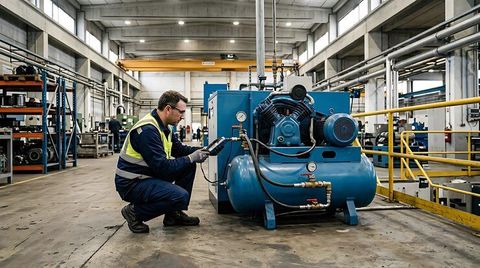
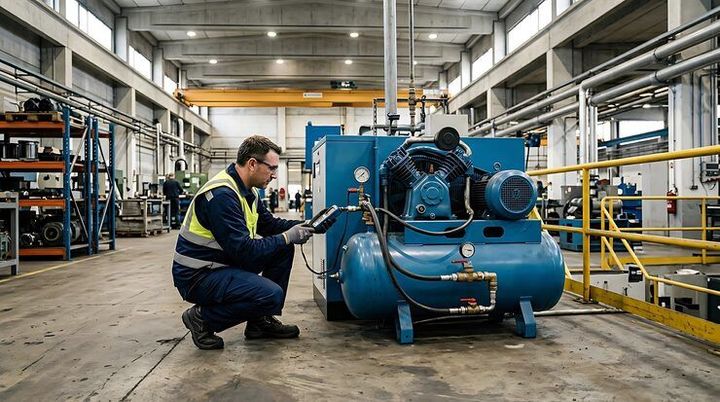
An industrial air compressor system can include the compressor, motor or engine, air receiver, filters, dryers, piping, controls, and safety equipment.
Understanding pressure systems, airflow, compressor types, and operating principles helps users select appropriate equipment for different applications. This guide explains the basics of industrial air compressors, their importance, recent developments, relevant regulations, and useful resources in simple terms.
Context – Industrial Air Compressors
An air compressor increases the pressure of atmospheric air by reducing its volume or using another compression method. The compressed air is then stored or delivered through a distribution system to equipment that requires pneumatic power.
Common industrial compressor types include:
| Compressor type | Basic principle | Common industrial uses |
|---|---|---|
| Rotary screw | Uses rotating screw elements | Manufacturing, processing, continuous operation |
| Reciprocating | Uses piston movement | Intermittent or high-pressure applications |
| Centrifugal | Uses high-speed rotating impellers | Large-scale continuous airflow |
| Rotary vane | Uses rotating vanes inside a chamber | General industrial pneumatic applications |
| Scroll | Uses two spiral-shaped elements | Clean and specialized applications |
Air pressure is commonly measured in bar, psi, or kPa. Airflow may be expressed as cubic feet per minute (CFM), liters per second, or cubic meters per minute. Both pressure and airflow need to match the requirements of the equipment using compressed air.
An industrial compressed-air system generally follows this path:
- Atmospheric air enters through an intake filter.
- The compressor raises the air pressure.
- Cooling removes heat generated during compression.
- A receiver may store compressed air.
- Dryers and filters can remove moisture and contaminants.
- Piping distributes compressed air to points of use.
Importance – Why Industrial Air Compressors Matter
Compressed air is used as a source of pneumatic power across many industries. It can operate tools, actuators, valves, automation equipment, packaging machinery, cleaning equipment, and production systems.
The correct relationship between pressure and airflow is important. A tool may require a particular operating pressure but also need sufficient airflow to maintain that pressure during continuous operation.
Compressed-air quality is another important factor. Moisture, oil, particles, and other contaminants can affect pneumatic equipment and production processes. The required air quality depends on the application.
Industrial air compressors can affect:
- Manufacturing plants
- Food and beverage processing
- Pharmaceutical production
- Automotive facilities
- Chemical processing
- Textile production
- Packaging operations
- Construction activities
System design also affects energy use. Air leaks, excessive pressure settings, poor maintenance, unsuitable piping, and inappropriate compressor controls can reduce overall system efficiency.
Recent Updates – Trends and Developments
Modern industrial air compressor systems increasingly incorporate electronic controls, variable-speed drives, sensors, and monitoring technologies. These features can help operators observe pressure, temperature, operating hours, and other system parameters.
Variable-speed compressor technology adjusts motor speed according to changing compressed-air demand. This can be useful where airflow requirements vary throughout the production cycle.
Digital monitoring is also becoming more common. Sensors can collect information about operating conditions and provide data for maintenance planning and system analysis.
Other developments include:
- Improved motor efficiency
- Variable-speed drive systems
- Advanced compressor controllers
- Remote system monitoring
- Improved air-treatment equipment
- Heat-recovery systems
- More precise pressure management
Heat recovery is another area of interest because compression generates heat. In suitable installations, recovered heat can be directed toward processes such as water heating or space heating.
The suitability of any technology depends on operating conditions, pressure requirements, airflow demand, duty cycle, environmental conditions, and the characteristics of the facility.
Laws or Policies – Industrial Compressor Requirements
Industrial air compressor installations can be affected by workplace safety rules, pressure-vessel requirements, electrical regulations, environmental requirements, and industry-specific standards.
Requirements vary by country and application. In the United States, workplace requirements may involve the Occupational Safety and Health Administration (OSHA), while pressure vessels can be subject to applicable standards and inspection requirements.
In India, industrial installations may need to consider applicable occupational safety provisions, state-level factory requirements, pressure-vessel rules, electrical regulations, and environmental requirements. The exact obligations depend on the installation, location, industry, and equipment.
International standards can also help organizations establish technical requirements. ISO standards cover areas such as compressed-air quality and energy-efficiency assessment.
Operators should verify current requirements with the relevant government authority, qualified safety professionals, and applicable standards organizations before installing or modifying an industrial compressed-air system.
Tools and Resources – Industrial Air Compressor Planning
Several resources can help users understand and evaluate compressed-air systems.
Useful resources include:
- Manufacturer technical manuals and compressor documentation
- Pressure and airflow conversion calculators
- Compressed-air leakage assessment tools
- Air-quality classification references
- Energy-efficiency assessment methods
- Maintenance inspection checklists
- Piping and pressure-drop calculation tools
A basic assessment can begin by recording operating pressure, average airflow, peak airflow, operating hours, compressor capacity, receiver size, and air-treatment requirements.
Pressure-drop calculations are particularly useful when designing piping. Undersized pipes, unnecessary bends, restrictive filters, and unsuitable fittings can increase pressure losses between the compressor and the point of use.
Air receivers can help manage demand fluctuations and reduce rapid compressor cycling in suitable systems. However, receiver sizing should be based on system requirements rather than using a fixed size for every application.
FAQs – Industrial Air Compressors
What is an industrial air compressor?
An industrial air compressor is equipment designed to compress atmospheric air and provide pressurized air for industrial processes, tools, automation, and machinery.
What is the difference between pressure and airflow?
Pressure describes the force exerted by compressed air, while airflow describes the quantity of air delivered over a specific period. Industrial equipment may require both a particular pressure and a minimum airflow.
Which compressor types are commonly used in industry?
Rotary screw, reciprocating, centrifugal, rotary vane, and scroll compressors are among the commonly used types. The appropriate type depends on pressure, airflow, duty cycle, air quality, and application requirements.
Why are air dryers and filters used?
Air dryers help reduce moisture, while filters can remove particles, oil aerosols, and other contaminants. Their requirements depend on the compressed-air quality needed by the application.
How can compressed-air systems be monitored?
Systems can be monitored using pressure sensors, temperature sensors, flow meters, compressor controllers, energy meters, and digital monitoring platforms. Monitoring can help identify changing operating conditions and potential system problems.
Conclusion – Industrial Air Compressor Knowledge
Industrial air compressors provide pressurized air for a wide range of industrial applications. Understanding compressor types, pressure, airflow, air quality, storage, distribution, and control systems provides a foundation for evaluating compressed-air installations.
Recent developments in variable-speed technology, sensors, digital monitoring, and heat recovery are changing how compressed-air systems are managed. Regulatory requirements and technical standards should always be checked for the specific country, industry, and installation.
A well-planned compressed-air system considers both the equipment and the complete air network. Pressure requirements, airflow demand, air treatment, piping, storage, monitoring, and safety all contribute to reliable system operation.
For educational planning, users can combine manufacturer documentation with recognized technical standards, government regulations, and compressed-air assessment tools. This provides a broader understanding of how industrial air compressors operate and where different technologies may be appropriate.