Explore Battery Manufacturing Equipment: A Complete Guide to Modern Production
Battery manufacturing equipment refers to the machines, systems, and testing technologies used to transform raw battery materials into finished cells and battery packs.
These systems support processes such as electrode preparation, coating, drying, cell assembly, formation, inspection, and quality testing.
Modern battery production requires carefully controlled equipment because battery performance depends on material consistency, manufacturing precision, cleanliness, and process conditions. The equipment used can vary according to battery chemistry, cell format, production scale, and technical requirements.
Context
Battery manufacturing equipment forms the physical foundation of industrial battery production. A typical production line combines multiple machines that perform different stages of cell manufacturing. The exact configuration depends on whether the facility produces cylindrical, prismatic, or pouch cells and whether it uses lithium-ion, sodium-ion, solid-state, or another chemistry.
The process generally begins with preparing active materials and other components. Electrode materials are mixed into a controlled slurry before being applied to metal current collectors through coating equipment. Drying systems then remove solvents and moisture under controlled conditions.
After drying, calendering equipment can compress the electrode coating to achieve the desired thickness and density. Slitting machines divide coated electrode rolls into appropriate widths. Additional equipment may perform vacuum drying and material handling before the electrodes enter the cell assembly area.
Cell assembly typically involves stacking or winding electrodes with separators. Depending on the cell design, equipment may then perform welding, electrolyte filling, sealing, and other assembly operations.
The formation and testing stages are particularly important. Formation equipment applies controlled electrical charging and discharging cycles to activate cells and establish their initial electrochemical characteristics. Aging, grading, inspection, and data collection systems can then evaluate cell performance.
| Manufacturing Stage | Typical Equipment | Main Purpose |
|---|---|---|
| Material preparation | Mixing systems | Prepare consistent electrode materials |
| Electrode production | Coating and drying systems | Apply and dry electrode layers |
| Electrode finishing | Calenders and slitters | Control thickness and dimensions |
| Cell assembly | Winding or stacking equipment | Build the internal cell structure |
| Electrolyte processing | Filling systems | Introduce electrolyte under controlled conditions |
| Formation | Charge-discharge equipment | Activate and evaluate cells |
| Inspection | Testing and vision systems | Identify dimensional and manufacturing defects |
| Pack production | Module and pack assembly equipment | Integrate cells into battery systems |
Importance
Battery manufacturing equipment matters because manufacturing conditions can directly affect safety, capacity, cycle life, consistency, and reliability. Small variations in electrode thickness, moisture levels, alignment, welding, or electrolyte filling can influence the final cell.
High levels of process control are therefore important throughout production. Equipment is commonly integrated with sensors, measurement systems, programmable controls, machine vision, and manufacturing data platforms.
Several groups are affected by developments in battery manufacturing equipment:
- Battery manufacturers depend on consistent production processes.
- Automotive manufacturers require cells that meet defined performance and safety specifications.
- Energy-storage developers need batteries suitable for long-duration and stationary applications.
- Equipment engineers develop systems capable of handling increasingly demanding production requirements.
- Quality and regulatory teams monitor process records and product testing.
- Researchers use pilot-scale equipment to evaluate new electrode materials and cell designs.
Automation has also become an important part of modern battery factories. Automated material handling, inspection, process monitoring, and data collection can reduce manual variation and provide more detailed production records.
Recent Updates
Battery manufacturing is changing as demand expands across electric vehicles, stationary energy storage, consumer electronics, and industrial applications. One important development is the expansion of production capacity for lithium-ion batteries, alongside growing research into alternative chemistries.
Manufacturers are also focusing on equipment that can support faster production while maintaining process consistency. Advanced coating systems, precision calendering, automated assembly, and high-throughput formation systems are examples of technologies used to improve manufacturing efficiency.
Dry-room technology remains important for many lithium-ion manufacturing processes because moisture can negatively affect sensitive battery materials. Facilities therefore use controlled environments to maintain specified humidity levels.
Machine vision and automated inspection are becoming increasingly important. Cameras and sensors can examine electrode surfaces, cell dimensions, welds, seals, and other characteristics. Data from these systems can be combined with manufacturing records to identify process variations.
Digital manufacturing is another significant trend. Equipment can generate large amounts of information about temperatures, pressures, electrical measurements, material movement, and production conditions. Manufacturing execution systems and industrial data platforms can help organize this information.
Research into solid-state batteries is also influencing equipment development. Solid-state designs can require different material handling, pressing, stacking, or assembly processes compared with conventional liquid-electrolyte cells.
Another area of development is recycling. Battery recycling facilities use specialized equipment for discharge, dismantling, crushing, separation, material recovery, and subsequent processing. Designing manufacturing and recycling processes together can support more efficient material utilization.
Laws or Policies
Battery manufacturing is subject to environmental, workplace, transportation, product-safety, and waste-management requirements. The exact rules depend on the country, battery chemistry, facility type, and intended application.
In the European Union, the Battery Regulation establishes requirements covering batteries and their lifecycle, including sustainability, labeling, collection, recycling, and information requirements. Manufacturers and other organizations operating within the relevant European market need to assess applicable obligations.
In the United States, battery facilities may need to comply with federal, state, and local requirements involving environmental protection, workplace safety, hazardous materials, and waste management. The Occupational Safety and Health Administration and Environmental Protection Agency are among the agencies whose rules may apply depending on the manufacturing process.
India has also established regulatory frameworks relevant to batteries. The Battery Waste Management Rules, 2022 address areas including producer responsibility, collection, recycling, and environmentally sound management of battery waste.
Manufacturing facilities may also need appropriate controls for:
- Chemical handling and storage
- Worker exposure
- Fire prevention and emergency response
- Industrial emissions
- Waste management
- Electrical safety
- Battery transportation and labeling
Because regulations can change, organizations should consult the applicable government authorities and current regulatory documents before establishing or modifying a production facility.
Tools and Resources
Several types of tools can help people understand and plan battery manufacturing processes.
Government regulatory websites are useful for checking current environmental, workplace, transportation, and battery-waste requirements. Technical standards organizations can provide information about testing and safety practices.
Engineering teams may also use:
- Battery performance calculators
- Energy and mass-balance spreadsheets
- Production-capacity calculators
- Equipment specification templates
- Process-flow diagrams
- Quality-control checklists
- Preventive-maintenance schedules
- Manufacturing data dashboards
Technical publications and academic research can provide additional information about electrode processing, cell chemistry, formation methods, battery degradation, and emerging manufacturing techniques.
For beginners, studying the complete battery manufacturing sequence is often more useful than examining individual machines separately. Understanding how mixing, coating, drying, calendering, assembly, formation, and testing interact provides a clearer view of the complete production system.
FAQs
What is battery manufacturing equipment?
Battery manufacturing equipment includes machines and systems used to prepare materials, manufacture electrodes, assemble cells, perform formation, inspect products, and construct battery modules or packs.
What equipment is used for lithium-ion battery production?
Common equipment includes mixing systems, coating machines, drying systems, calenders, slitters, winding or stacking machines, electrolyte filling equipment, sealing systems, formation equipment, and inspection systems.
Why is a dry room important in battery manufacturing?
Many lithium-ion processes require controlled moisture levels because water can react with sensitive battery materials and affect cell performance, safety, and manufacturing consistency.
How does battery formation equipment work?
Formation equipment applies controlled charging and discharging cycles to newly assembled cells. The process helps establish the cell's electrochemical characteristics and provides measurements used for evaluation and grading.
Is battery manufacturing equipment the same for every battery chemistry?
No. Equipment requirements can differ significantly according to chemistry, electrode materials, cell format, electrolyte system, manufacturing process, and production objectives.
Conclusion
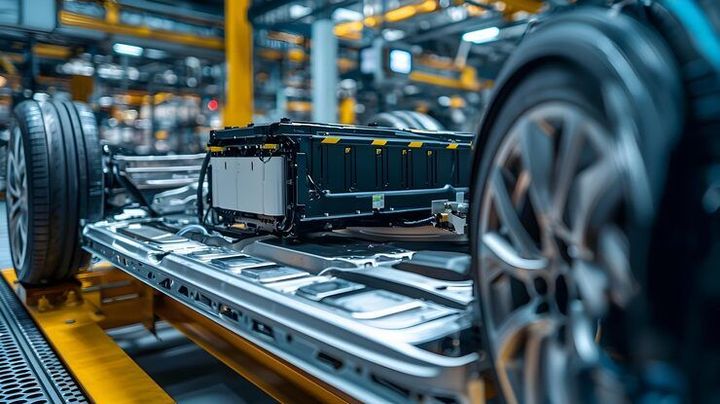
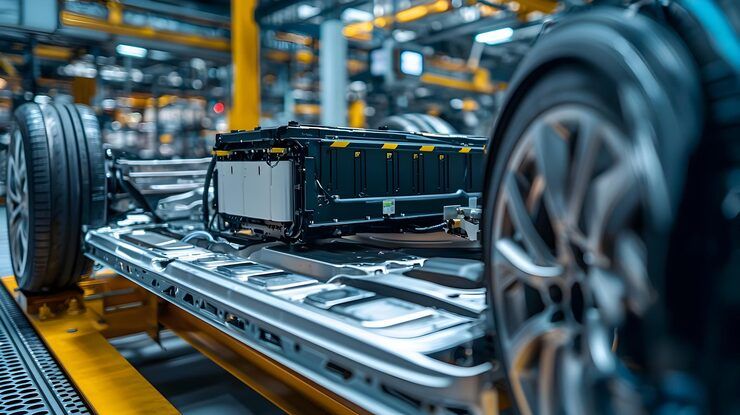
Battery manufacturing equipment combines material-processing, assembly, electrical testing, inspection, automation, and data-management technologies into an integrated production system. Each stage contributes to the consistency, performance, and safety characteristics of the finished battery.
Understanding the complete manufacturing sequence helps explain why modern battery factories require controlled environments, precise machinery, extensive testing, and detailed process monitoring. As battery technologies continue to develop, manufacturing equipment is expected to evolve alongside new materials, cell designs, automation methods, and recycling processes.
For anyone studying battery production, the most useful starting point is the relationship between individual manufacturing stages. Looking at the entire process provides a practical foundation for understanding how raw materials become tested cells, modules, and complete battery systems.
Battery manufacturing is also closely connected with environmental management and regulatory requirements. Keeping track of current standards and government policies is therefore an important part of understanding modern battery production.